This article was first published on The New Turkey on December 11, 2018.
The U.S. balancing act between supporting the PYD and providing reassurances to Turkey to be able to cooperate on the resolution of the Syrian conflict is not an easy one.
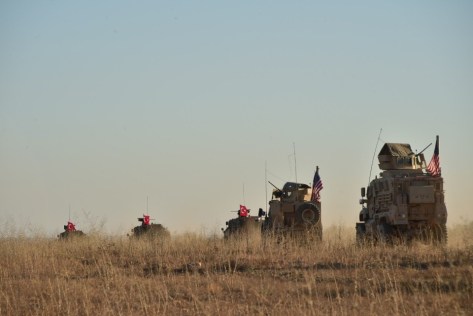
The U.S. wants to cooperate with Turkey on all issues related to the Syrian conflict and sees it as critical to end the civil war. The U.S. Syria envoy James Jeffrey points to the Manbij agreement as a good model for broader cooperation. He is reassuring Turkey that the PYD and YPG members are leaving Manbij and that they will not participate in local councils and the police force, as Turkish policymakers have demanded. Progress, however, in Manbij has been slow and Turkey has yet to declare that the YPG members have left to go east of the Euphrates. It is also not clear in what areas specifically this model can be replicated. Some progress is obviously better than none and the U.S.’ willingness to work with Turkey is an encouraging sign, both for stability of northern Syria and also for the end of the broader conflict. Nevertheless, we need to keep in mind that Turkey continues to be concerned about and feel threatened by YPG control and presence east of the Euphrates as well.
The envoy’s remarks about “pulling the plug” on the Astana process was met with criticism both by Turkey and Russia, who believe they have been making progress contrary to outside views about the lack of tangible results. The failure to create a constitutional committee to draft a new constitution has suffered from the dynamics of the conflict at play since the beginning. The opposition remains fragmented and Assad’s supporters, Russia and Iran, remain invested in the continuation of the regime. Determining the composition of the committee has been extremely difficult not only because the guarantor states cannot agree on who will be participating in the constitution writing process but also because of the fundamental dynamics of the conflict.
In other words, if the balance of power is not significantly changed between numerous sides on the ground, there will be no party that is able to impose its will. By refusing to empower the Arab opposition in concert with Turkey, the U.S. has contributed to this fragmentation. It is not a matter simply of diplomatic negotiations over picking the constitution writers but it is also about creating a committee that reflects the power dynamics on the ground for drafting a constitution acceptable to all sides. In this process, the U.S. should actually support Turkey’s efforts and empower the opposition representatives at the negotiation table instead of calling for the replacement of the Astana process with that of the UN process. The Astana process has been effective in creating de-confliction zones and a forum for those with military presence on the ground to have sustained dialogue. It has not produced a political solution so far but it can contribute to it by engaging one of the most crucial actors on the ground, i.e. Iran.
The U.S. has already declared pushing Iran out of Syria as a major policy goal in Syria and Jeffery’s comments about the end of the Astana process appear to reflect that objective in mind. The Trump administration has been talking about confronting and rolling back Iran’s influence in the region, however it does not currently have a clear plan to achieve that. The only other alternative is for the U.S. to fundamentally shake up the dynamics on the ground and create a different game where other actors may be lured to a framework that excludes Iran. This, however, will be extremely difficult given Iran’s investments in Syria and willingness to commit its military and human resources on the ground. Absent a serious American investment to isolate Iran in Syria, Iran will continue to be part of the discussion as it can act as a spoiler militarily, politically, and diplomatically.
The U.S. balancing act between supporting the PYD and providing reassurances to Turkey to be able to cooperate on the resolution of the Syrian conflict is not an easy one. Moreover, the U.S. hopes to push Iran out of the equation in Syria while achieving a political solution to the civil war, as well as, an “enduring” defeat of Daesh. Granted that the complexity of the terrain has a lot to do with this complicated picture, but the lack of clarity and the mismatch of the U.S. goals with its investments on the ground is the enduring story from the Obama to the Trump administration. The good news is that the U.S. recognizes the crucial role of Turkey in all these goals, however the bad news is all these goals are unlikely to be achieved simultaneously.
This article was first published by New Turkey on December 4, 2018.
Today, what we are seeing is the increasing irrelevance and greater provincialization of multilateral institutions that are supposed to provide comprehensive global solutions. This reality promises further uncertainty and instability around the world, which is already faced with challenges no single nation can solve on its own.
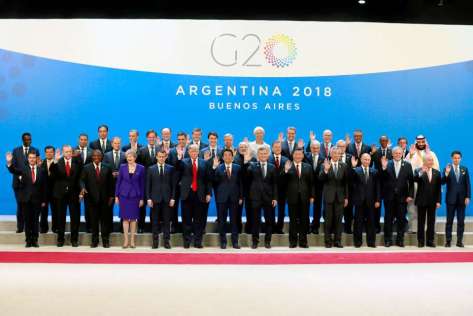
The G20 summit in Argentina ended with no major breakthrough or a breakdown but that is not good news for the pressing global challenges. From climate change to international terrorism and from civil wars to refugee crises, there are a host of issues that continue to spread instability throughout the planet. G20 was conceived of as an institution to bring together economically most capable nations to contribute to the resolution of international challenges outside the United Nations framework, which has long been hampered by the inaction of veto-wielding powers at the Security Council.
To be sure, the G20 was never meant to substitute the UN but it was nevertheless supposed to be more flexible and responsive to global problems hindering economic development and stability. The latest convening of the summit avoided any major political dramas but it has not produced much in the way of building a common framework on any of the major issues facing the community of nations.
All eyes were on President Trump as he finds himself being challenged at home by the Mueller investigation, which appears to be ending. He also has been the subject of heavy criticism for essentially siding with the Saudi administration in the Khashoggi affair in the name of protecting American interests. Further, Russia’s most recent aggressive actions in Ukraine have forced him to cancel a potential meeting with President Putin. His seemingly temporary truce with China was most likely motivated by the need to avoid yet another major political drama, which could have rattled the markets and cost him support domestically. Despite the fact that he appointed a hardliner to lead the trade negotiations going forward, this temporary halt to the trade wars provided him with some ammunition to sell it as a political victory to his constituency. Despite the multilateral nature of the G20 gathering, the biggest news the U.S. walked away with was still a bilateral one, very much fitting the President’s America First approach.
The U.S. was often the major force driving the big agenda items in these international gatherings but this time around nobody expected it in the first place due to the “America First” president in office. At the same time, here appeared to be no clear substitute for the U.S. leadership either. The major players seemed content with a reduced American role that is not interested in leading the conversation to resolve world’s big problems, economic or otherwise. The final communique could not go beyond reaffirming the importance of the multilateral global trading system and had to exclude any criticism of “protectionism” or “unfair trade practices” due to the American and Chinese sensitivities.
Many observers are just happy that a communique was even possible where the Trump administration has attacked multilateralist institutions established in the past under the U.S. leadership. The unwillingness of the U.S. to support the very principles of these very institutions undermines the effectiveness of G20, especially in the absence of another great power willing to underwrite these principles.
While the U.N. has been dysfunctional largely due to the veto powers held by the Security Council member states, the G20 is now becoming ineffective as a result of its “natural leader” to refuse a robust leadership role with a global agenda. That is why, many regional and bilateral issues seemed to be more at the forefront during the summit. The gathering provided yet another opportunity for countries like Turkey to bring the regional issues to the agenda.
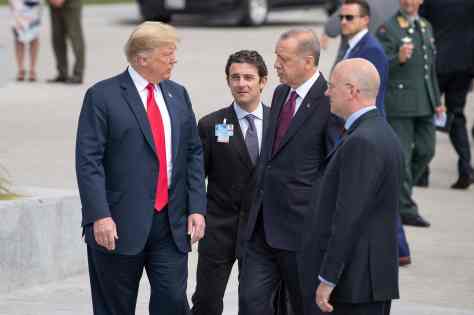
Turkey was vocal about the Khashoggi affair, calling on the international community once again to treat it as an affront to international norms. President Erdogan met with President Trump on the sidelines to discuss the status of northern Syria, which has critical national security implications for Turkey. In this sense, Turkey had a successful summit. Nevertheless, the summit underperformed considering the urgency and the seriousness of the global issues facing the planet although some might be content that it ended with a common declaration at the end.
Today, what we are seeing is the increasing irrelevance and greater provincialization of multilateral institutions that are supposed to provide comprehensive global solutions. This reality promises further uncertainty and instability around the world, which is already faced with challenges no single nation can solve on its own. When the most powerful G20 nations cannot unite around a common global agenda, it is becoming increasingly clear that the monumental challenges of the world will remain unattended at least for the time being.
This article was first published by New Turkey on November 21, 2018.
The U.S.-Turkey relationship is going through interesting times, as both allies are willing to work through their differences despite serious disagreements over a host of issues.
The U.S.-Turkey relationship is going through interesting times, as both allies are willing to work through their differences despite serious disagreements over a host of issues. Turkey has been pressing the U.S. as well as the international community to take a firmer stand against those responsible for the murder of Jamal Khashoggi inside the Saudi consulate in Istanbul.
The Turkish position puts President Trump in an awkward position, as he appears inclined to accept that the Crown Prince Mohammad bin Selman was not responsible. Trump also pledged that the relationship with Saudi Arabia would not be affected by the Khashoggi affair. Despite this disagreement, President Trump made some positive statements about President Erdogan and Turkey, citing the release of Pastor Andrew Brunson last month. Most recently, when asked about the extradition of Gulen to Turkey, Trump denied getting involved in the legal process but stated that the U.S. is looking for “whatever we can do for Turkey.”
There is also the U.S. support for the YPG that continues to be a sticking point. However, both the American and Turkish leaderships express willingness to work through these differences largely because the two NATO allies have a lot more to gain by working together than at cross purposes.
For some analysts, the Khashoggi case has been a useful tool for Turkey to play politics in a geostrategic power struggle. It is important to note that the Saudi failure to provide an explanation for what happened to Khashoggi lasted weeks. Every explanation the Saudis provided was quickly falsified by facts and Turkey insisted on accountability as well as national sovereignty. For all intents and purposes, the Saudi behavior forced Turkey to leak facts and made it all too easy to pursue a “drip drip strategy,” if there was ever such a conscious strategy in the first place.
The U.S. media’s pressure on the Trump administration to take a clear stance was indirectly owed to Turkey’s unwillingness to let this murder be covered up. Turkey made a careful distinction between King Salman and the rest of the Saudi leadership, creating at least some wiggle room without abandoning full accountability for Khashoggi’s murder. President Trump may have preferred that the issue goes away somehow but his administration continued to engage Turkey on the matter. This dynamic of persistent engagement despite deep differences is interesting and might provide a blueprint at least for the next two years.
Both on the issue of Gulen’s extradition and the U.S. support for the YPG, there seems to be a similar dynamic at play. Turkey has requested Gulen’s extradition and pushed hard for it politically but understands the political constraints on the Trump administration. This does not mean Turkey will contend itself with the status quo and give up on the extradition request. Turkey will continue to bring up the issue and pressure the U.S. side to act against the Gulen network all the while engaging instead of confronting the administration. With regard to the YPG issue, Turkey again insists that the U.S. should stop supporting the organization because of its links to the PKK. Yet, it continues to engage the new U.S. team on the Syria policy without accepting any kind of normalization of the YPG.
All the minefields in the U.S.-Turkey relationship need careful analysis and comprehensive policy coordination and there is a long way to go before that happens. Nevertheless, it is important to underline that the two sides are both willing to listen to each other’s positions and engage in a meaningful way. It is not clear if this dynamic will be sustainable in the medium and long terms but it should be considered a start in any case.
Time will tell if this is all we can hope for but continuous engagement through crises may be the solution for the time being. However, we should not lose sight that a comprehensive strategic dialogue would produce more concrete and sustainable results in the long run.
This article was first published by The New Turkey on November 14, 2018.
The midterms created a split in Congress, which promises major political showdowns between the President and House Democrats. As further infighting appears to be on the horizon, Trump may turn to foreign policy to project an image of strength despite his domestically inclined America first agenda.
The last season of the much-acclaimed House of Cards features the story of the first woman American president Claire Underwood (Hale). The storyline is quite a bit of a commentary on the current debates in U.S. politics, women’s participation in politics, relations with Russia, impeachment of a president or even a Supreme Court judge among others. In the first two years of Trump’s presidency, many controversies have dominated the political debate but the president has not been seriously threatened despite much political ruckus. With Democrats in the House majority now, more political turmoil awaits the U.S. public as a number of investigations may be conducted in the coming months. Not to mention the Mueller probe that may have fatal consequences for President Trump. The midterms created a split in Congress, which promises major political showdowns between the President and House Democrats. As further infighting appears to be on the horizon, Trump may turn to foreign policy to project an image of strength despite his domestically inclined America first agenda.
Democrats will have to play their “cards” carefully as they will not want to be seen as “obstructionists” who are only interested in going after President Trump personally instead of serving the interests of the American people. The Democratic Party leadership has signaled that they want irrefutable evidence out of the Mueller probe and broad Republican support before considering impeachment. No matter what comes out of the Mueller probe, however, it will come down to a political decision and a judgment call by Democrats. Given the high likelihood that President Trump will continue to enjoy strong support by Republicans, Democrats dead set on impeachment will probably be disappointed. However, this does not mean that the administration will not face serious pressure from Congress in all fronts, both in terms of congressional investigations and public policy.
Trump’s removal of the Attorney General Jeff Sessions and his replacement of Matthew Whitaker instead of Rod Rosenstein is instructive as the president wants the Mueller investigation to be neutralized, denying ammunition to the House Democrats. Democrats have been threatening to investigate Sessions’ replacement with Whitaker but it is not clear if they can prevent him from overseeing the Mueller probe in a way aligned with his public statements against the investigation. Clearly, this investigation has the potential to determine the relationship between the president and the House Democrats in the next two years. In all likelihood, the drawn-out process will make legislation extremely difficult, if not impossible. In that case, Trump may simply turn to foreign policy to win points in the eyes of the American public heading to the 2020 presidential election.
One obvious place will be the Middle East, particularly Iran. The administration already pulled out of the JCPOA and snapped back sanctions, issuing 6-month waivers to 8 countries including Turkey. Squeezing Iran and bringing them to the table on the administration’s terms seems to be the ultimate goal here, as is clear from the Secretary of State Pompeo’s article in Foreign Affairs. Iran will likely wait to see the results of the 2020 elections before committing to negotiations despite the harsh sanctions. In that case, Trump may try to exert more pressure on Iran with additional sanctions, perhaps refusing to extend further waivers to countries trading with Iran. Pushing against pro-Iranian forces in Syria, Iraq, and Yemen is another strategy the administration could pursue but so far Trump has not devised a comprehensive regional strategy against Iran. House Democrats have promised to investigate Trump’s relationship with the Saudis as well, which may limit his ability to increase pressure against Iran in the Persian Gulf.
Another foreign policy issue candidate to display strength and whip up domestic support would be North Korea. However, President Trump’s rhetoric on this one reached such heights in the past that a repeat of it would come dangerously close to war. Both Iran and North Korea issues carry the risk of escalation and miscalculations but Trump’s deeply anti-war agenda was part of how he won the presidency in the first place. If he comes too close to or engages in yet another war, he will lose domestic support even from his constituency. So far, President Trump has been able to shape or at least change the public debate whenever he wanted to a large extent. As he might seek to bolster his image abroad, the alliances and institutions he has attacked so far may not be there to help him. In that case, the unilateral action may be his only choice. The U.S. presidents have leaned on foreign policy issues when they felt trapped at home but that can have costly consequences at home as well.
President Trump has enjoyed Republican support in both houses of Congress until now, succeeding in cutting taxes, deregulation and Supreme Court appointments among others. In the next two years, he will be faced with a House intent on preventing his agenda and investigating his administration. As major legislation will be close to impossible to pass through Congress, he may choose to play his foreign policy card in the lead up to 2020. It is not clear if it will be enough, however, and he will have to play his hand just as well as the House Democrats.
Bu yazı ilk olarak 21 Ekim 2018 tarihinde Kriter‘de yayınlanmıştır.
Download PDF
Brunson davasının Trump yönetimiyle bu kadar ciddi bir kriz yaratmasını 15 Temmuz darbe girişiminin Türk-Amerikan ilişkilerinde yarattığı ağır tahribatın sonuçlarından biri olarak görmek mümkün. Darbe girişimi sırasında ve hemen sonrasında Washington’un darbeye karşı çıkmada ‘bekle gör’ olarak algılanan tavrı Ankara’yla derin bir güven krizi doğurdu. Obama yönetimi yetkililerinin yaptığı açıklamalar FETÖ liderinin darbeden sorumlu tutulması ve hukuki olarak gereğinin yapılacağı konusunda Türkiye’ye güven vermedi. Bu tavır ABD’nin Türkiye’nin ulusal güvenlik tehdidi olarak gördüğü ve terör örgütü olarak tanımladığı FETÖ’yü koruduğu şeklinde algılandı. Bunun üzerine Suriye’de YPG’ye verilen Amerikan desteğinin artarak devam etmesi ikili güven ilişkisini en alt seviyelere indirdi. Türkiye’nin doğrudan mücadele ettiği iki örgütün ABD tarafından desteklenen görüntüsü Obama döneminin en kötü mirası oldu.
Bu durum Brunson davasında etkisini göstererek karşılıklı güven inşa edilmesini zorlaştırdı. Trump yönetiminin hukuki süreçleri görmezden gelerek Türkiye’ye adeta bir ültimatom vermesi Amerikan iç siyasi dinamikleri ve Başkan Yardımcısı Pence’in baskısıyla doğrudan bağlantılıydı. Buna rağmen, bahsettiğimiz karşılıklı güvensizlik daha sağlıklı bir diyalog kurulmasının önüne geçti. Brunson’ın suçlu bulunması sonrasında tahliye edilmesi Başkan Trump’ı son derece memnun etti ve Türkiye’ye yönelik pozitif bir söyleme dönmesini sağladı. Yine de bu durum Türk-Amerikan ilişkilerindeki güvensizliğin temel nedenlerinin ortadan kalktığı anlamına gelmiyor. İlişkilerin daha sağlıklı bir zemine oturabilmesi için hem Trump yönetiminin bazı adımlar atması (Türkiye’nin bakanlarına uyguladığı yaptırımları, çelik ve alüminyuma ek vergileri kaldırması gibi) hem de iki tarafın bu güvensizliği ortadan kaldırmak için özel bir çaba sarf etmesi gerekecek. Brunson davasının bir hukuki mesele olarak değerlendirilmesini imkânsız kılan dinamiklerin ortadan kaldırılması için aktif bir çaba gösterilmesi her iki ülkenin de çıkarına olacaktır.
Suriye’de Yakınlaşma İhtimali
Suriye meselesi Türk-Amerikan ilişkilerini önümüzdeki dönemde zorlayacak en ciddi sorunlar yumağını barındırıyor. İki tarafın genel olarak Suriye politikalarında ciddi farklılıkların devam etmesine ilaveten ABD’nin Kuzey Suriye’de YPG’ye yatırım yapmaya devam etmesi karşılıklı güvensizliğin devamını garanti ediyor. Obama yönetimi YPG’ye yardımı DEAŞ’la mücadele kapsamında geçici ve sınırlı bir destek olarak tanımlayarak Türkiye’yi yatıştırmaya çalışmış ancak bunda başarılı olamamıştı. Trump yönetimi ise bu politikayı devam ettirdi ancak DEAŞ’ın artık hâkim olduğu bir toprak bütünü kalmadığı bir ortamda YPG desteğini İran’ın etkisini kırma amacına binaen meşrulaştırıyor. YPG’nin İran’a karşı harekete geçmeyeceği aşikar olduğu için bu konuda Türkiye’nin derin rahatsızlığı ve şüpheleri devam edecek.
Daha önce Türkiye’de elçilik görevinde bulunmuş ve Türkiye’nin hassasiyetlerini ve politikalarını en iyi anlayan isimlerden biri olan James Jeffrey’nin Trump yönetimi tarafından Suriye özel temsilcisi olarak atanması küçük de olsa bazı fırsatlar doğurabilir. Esed rejiminin Rusya’nın desteğiyle İdlib’e girme tehdidi savurduğu ve Türkiye’nin yoğun bir diplomatik çabayla bunu engellediği bir dönemde Washington’dan Türkiye’nin pozisyonuna destek veren açıklamaların gelmesinin olumlu bir etki yarattığını söylemek mümkün. Trump yönetiminin Esed rejimini uyaran sert söyleminin Türkiye’nin elini güçlendirdiğini, Jeffrey’nin atanmasıyla Türkiye’yle birlikte çalışma iradesinin oluştuğunu ve en son Menbiç’te ortak devriyelerin başladığını düşündüğümüzde, Suriye konusunda Türk-Amerikan ilişkilerinin pozitif ivme kazanmasının mümkün olduğunu söyleyebiliriz. Ancak YPG’ye Amerikan desteğinin ciddi bir sorun olmaya devam edeceği kesin.
Trump yönetiminin yakın zamanda açıkladığı Suriye politikasının temel stratejik hedefinin İran’ın bölgesel etkisini kırmak olduğu biliniyor. Ancak bu hedefi somut olarak hayata geçirmek adına nasıl adımlar atacağı belli değil. İran’a karşı Türkiye’yi Suriye’de yanına almak isteyen Trump yönetiminin YPG meselesinde nasıl güvenceler verebileceği de belirsizliğini koruyor. Türkiye İran’ın Suriye’deki etkisinden elbette memnun değil ve bu etkinin azaltılması Türkiye’nin elini güçlendirir. Suriye meselesinin siyasi çözümü konusunda da Türkiye’nin masaya daha güçlü gelmesini sağlayabilir. Ancak PYD’nin bu siyasi çözüm sürecine katılmak istemesi ve ABD tarafının bunu makul bulması Ankara’yla Washington arasındaki Suriye yakınlaşmasını zora sokacaktır.
İran Yaptırımları
Obama döneminde Türk-Amerikan ilişkilerinin karşılaştığı en önemli sınamalardan biri İran nükleer meselesi olmuştu. Türkiye’nin BMGK geçici üyesi olarak 2010’da verdiği hayır oyu Ankara’ın ekseni kayıyor tartışmasının alevlenmesine yol açmıştır. Türkiye savaşa varacağı kaygısıyla ABD’nin yaptırım politikasına karşı çıkmış ve arabuluculuk yapmaya çalışmıştır. 2015 yılında varılan İran nükleer anlaşmasını destekleyen Türkiye, anlaşmanın Trump yönetimi tarafından iptalini de eleştirmekten geri durmamıştır. Her ne kadar Suriye konusunda karşıt konumda bulunsa da Türkiye İran’a askeri müdahaleye gidecek bir yola girilmesini istemiyor. Şimdilerde Trump yönetiminin İran’ı izole ederek yaptırımlara boğmaya çalışırken Avrupa’dan destek alamaması elini zayıflatıyor.
Türkiye’nin geçmişte olduğu gibi enerji ihtiyaçları dolayısıyla İran’dan petrol ve doğalgaz ihracına devam edeceğini açıklaması sonrasında Trump yönetiminin Türkiye’yi yaptırımlardan muaf tutmak için adım atması bekleniyor. Kasım başında uygulanması beklenen yaptırımların Türkiye’ye karşı da geçerli olması durumunda ikili ilişkilerin yeni bir kriz dönemine girmesi kaçınılmaz olacaktır. Trump yönetiminin yeni Suriye politikasında Tahran’ı geriletmeyi stratejik hedef olarak tanımlayıp Türkiye’yi yanına almak istemesinin doğal sonucu Türkiye’yi İran yaptırımlarından muaf tutması olmalıdır. Aksi takdirde Türkiye’nin ekonomisi olumsuz etkilenecek ve Ankara Washington’un Türkiye’yle çalışma konusundaki ciddiyetine inanmayacaktır.
Ortadoğu’da Güç Mücadelesinin Etkileri
Son birkaç haftadır yaşanan Kaşıkçı olayı, Ortadoğu’daki bölgesel güç mücadelelerinin Türk-Amerikan ilişkilerini doğrudan etkileyebileceğinin yeni bir örneği oldu. Gazeteci Kaşıkçı’nın basına sızdırılan detaylarda göründüğü itibarla İstanbul’da hunharca katledilmesi, Suudi veliaht Muhammed bin Selman’ın Trump yönetimiyle geliştirmeye çalıştığı sıkı ilişkiyi korumak ve bunu bölgedeki güç mücadelesinde kaldıraç olarak kullanmak için neler yapabileceğini gösteriyor. Selman’ın kendi ifadesiyle Türkiye’yi İran ve İhvan’la birlikte bir ‘şeytan üçgeninin parçası’ olarak görmesi ve Birleşik Arap Emirlikleri ve Mısır’ı yanına alarak Amerikan desteğiyle bölgede ‘karşı-devrim’ bloğunu güçlendirmeye çalıştığı görülüyor. Arap Baharı’nı Arap Kış’ına döndürmeyi hedefleyen bu bloğun İsrail tarafından tercih edildiği ve son zamanlarda Suriye’de de Türkiye’nin aleyhine çalıştığı biliniyor.
Türkiye’nin Kaşıkçı olayında öncelikle ABD’yi ve bütün uluslararası kamuoyunu denkleme dahil etme stratejisi son derece başarılı oldu. Türkiye’nin başından beri iyi niyetli olmadığı yönündeki yorumlar boşa çıkmakla kalmadı, Batı medyası cinayeti örtbas etmediği için Türkiye’ye teşekkür etti. Trump başından beri Suudilere bir açıklama yaparak işin içinden sıyrılmaları için açık bir kapı bıraktı ve bu nedenle Amerikan kamuoyunun sert tepkisini çekti. Kasım seçimlerine az bir zaman kala hem de ekonomi bu kadar iyi giderken Trump’ın Amerikan medyasının iki haftadan fazladır Kaşıkçı cinayetine odaklanmasından rahatsız olduğu aşikâr. Suudileri cezalandırmak adına Kongre’nin istediği gibi sert bir adım atması çok zayıf bir ihtimal olsa da Kasım seçimleri sonrasında Kongre’deki dinamiklerin değişmesi Trump’ı buna mecbur bırakabilir.
Kaşıkçı cinayeti Veliaht Prens Selman’ın çok ciddi paralar harcayarak ABD’de oluşturmaya çalıştığı ve Yemen savaşı nedeniyle inşa etmekte zaten zorlandığı modernleşmeci lider imajını tamamen yerle bir etti. Suudi ekonomisini yeniden inşa etmeye çalışan, kadınlara araba kullanma özgürlüğü tanıyan, bölgede İsrail’le çalışmaya hazır modernleşmeci lider imajına zarar veren Kaşıkçı’ya tahammül edememesi Selman’ın alanının son derece sınırlanmasına yol açtı. Kral olması bile tartışmaya açılan bu süreçte gösterdiği siyasi basiretsizlik önümüzdeki yıllarda Suudi Arabistan’ın bölgede istikrarsızlık kaynağı yeni bir dinamik yaratacağına işaret ediyor. Böyle bir istikrarsızlığın yeni bölgesel kriz alanları ve çatışma yaratması ve Türk-Amerikan ilişkilerinin de bundan nasibini alması kaçınılmaz.
Kasım Seçimleri Ne Getirir
Trump yönetimiyle birlikte Amerikan iç siyasetinin dış politikaya etkisi çok daha bariz hale geldi. Popülist bir lider olarak hemen hemen bütün dış politika meselelerini iç siyasette kullanarak ‘pazarlığa açan’ Trump, iç politikanın ihtiyaçları doğrultusunda Türkiye de dahil olmak üzere birçok müttefikiyle ilişkisinde inişli çıkışlı bir dönem yaşanmasına sebep oldu. Türkiye adına bunun en somut örneği Evanjelist tabanın son derece önem verdiği Brunson meselesi oldu. Brunson’ın tahliye edilmesinin pozitif etkisi olacağını söylemiştik ancak Trump’ın iç politika çıkarlarının önümüzdeki dönemde de etkili olacağının altını çizmek gerekiyor.
Kamuoyu araştırmaları Kasım seçimlerinde Kongre’nin üst kanadı Senato’da çoğunluğun Cumhuriyetçilerde kalacağını ancak alt kanadı Temsilciler Meclisi’nde çoğunluğun büyük ihtimalle Demokratlara geçeceğini gösteriyor. Bu senaryoda Trump’ın politikalarına güvensizlik oyu verilmiş olacak ve başkanı görevden azil süreci başlatmak için sabırsızlanan Demokratları harekete geçirecek. 2020’ye giden yolda Trump’ın bütün politikalarını kadük etmek isteyecek Demokratların dış politikada da özellikle Suudilerle ilişkilerini sorun haline getirmesini beklemek gerekiyor. Demokratların başkana bu gibi konularda baskı yapması Trump’ın dış politikada daha agresif bir tavır alarak güç gösterisinde bulunmaya çalışması sonucunu doğurabilir.
Kongre’de Demokratların etkisinin artmasının Türk-Amerikan ilişkilerine doğrudan etkisini kestirmek zor olsa da Kongre’de özellikle Brunson meselesi yüzünden hazırlanan Türkiye aleyhindeki tasarıların tekrar gündeme gelmesi söz konusu olabilir. Bu durumda Trump’ın Beyaz Saray’ın geleneksel olarak Türkiye’yle ilişkileri Kongre’den uzak tutmak isteyen tavrının nereye kadar devam edeceğini tahmin etmek zor. Yani Başkan Trump’ın Brunson konusunda olduğu gibi Kongre’den gelebilecek baskının iç siyasette kendini ne kadar zor durumda bıraktığına bağlı olarak Türkiye’ye sert tavır takınması çok uzak bir ihtimal değil.
Türk-Amerikan ilişkileri önümüzdeki dönemde Halkbank gibi bazı dava süreçleri, YPG ve FETÖ meseleleri, Suriye krizi, İran yaptırımları ve ABD’nin Kasım seçimlerinin getireceği sınamalarla karşı karşıya kalmayı sürdürecektir. Brunson’ın suçlu bulunduktan sonra tahliye edilmesinin yarattığı olumlu havanın bütün bu meseleleri çözmeye yetmesi imkânsız ancak Amerikan tarafında uzun süredir görmekte zorlandığımız Türkiye’yle çalışma iradesinin güçlenmesi durumunda pozitif bir dinamik oluşabilir. Bu dinamiğin sağlıklı ve kalıcı kurumsal bir düzleme oturtulmaması durumunda ikili ilişkilerde kırılganlık ve bölgesel meselelerde strateji farklılıklarını öne çıkmaya devam edecektir.
This article was first published by The New Turkey on October 16, 2018.
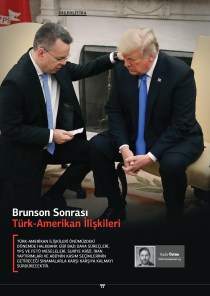
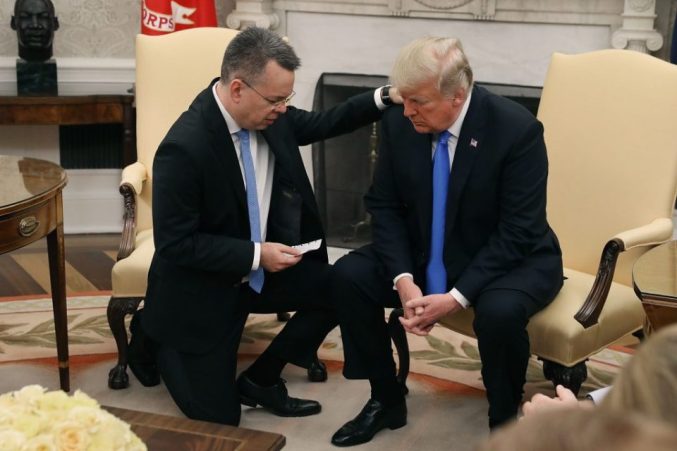
Brunson’s return to the U.S. and President Trump’s hosting of the pastor in the oval office with high level administration officials sends a strong message to the Evangelical base ahead of the midterm elections in November. Not that Trump risked losing the support of the Evangelicals, but Brunson’s return gives his standing with Evangelical supporters a big boost.
In the first year of President Trump’s tenure, Turkish-American relations went through what we can call a period of “sizing up,” as hopes for a new beginning were somewhat moderated by strategic challenges. The Trump administration had inherited the Obama policy of supporting “local forces” (read YPG) against Daesh with no U.S. boots on the ground save for the “military advisors.” Turkey was patient in Trump’s first year to allow the administration some time to re-evaluate the mission and start working with Turkey instead of the PKK’s Syrian branch. When it became clear that the Trump administration would settle on the same policy, Turkey launched a military operation in Afrin to ensure the YPG forces would not go west of the Euphrates river.
The serious divergence on the ground in northern Syria has continued, but efforts to put the U.S.-Turkey relationship back on track also continued, as outstanding legal cases (Brunson and Zarrab cases) were compartmentalized away from broader policy questions. However, the pressure from the Evangelical base of the Trump administration led to an ill-timed ultimatum by President Trump and Vice President Pence, resulting in yet another bilateral crisis.
As a result of the pressure, the U.S. imposed sanctions against Turkish ministers and additional steel and aluminum tariffs, a first against a NATO ally. These measures appeared to be largely symbolic, but they had a serious impact on the Turkish Lira’s devaluation against the U.S. dollar. As Turkey refused to bow down to such economic pressures, the relationship came to the brink of total breakdown. Clearly, the Brunson case was a major catalyzer in this process, but the underlying strategic disagreements and the already existing mutual distrust has created a fertile ground for a major crisis.
With the Turkish courts deciding to release Pastor Brunson last week, however, an important new phase might just be starting in the bilateral relationship. Brunson’s return to the U.S. and President Trump’s hosting of the pastor in the oval office with high level administration officials sends a strong message to the Evangelical base ahead of the midterm elections in November.
Not that Trump risked losing the support of the Evangelicals, but Brunson’s return gives his standing with Evangelical supporters a big boost. Turkish leadership has maintained the legal process played itself out and both sides insisted there was no specific deal. We should note that there does not need to be a deal for this development to have a positive impact on the U.S.-Turkey relationship.
The fact that a legal case derailed the relationship between two NATO allies should give everyone a pause. It underscores the complexity of the strategic environment in Turkey’s immediate neighborhood and heightened security concerns Turkey feels as a result of U.S. policies in the region. President Trump’s positive remarks about Turkey reflect his concern over his standing with the Evangelical voters, but this will not be enough for a broader strategic conversation between the U.S. and Turkey.
The recent changes in the U.S. Syria policy have given at least a limited amount of reassurances to Turkey that its interests would be taken into consideration more carefully. The U.S. rhetorical support for Turkey against an imminent military operation against Idlib was a welcome development in this sense. Yet, without a more comprehensive policy coordination between two sides, the mutual skepticism will continue, especially as the U.S. continues to support the YPG.
The upside for the relationship is that the “sizing up” period may be over and both sides are much clearer about their positions. The ambiguities regarding northern Syria as well as the uncertain fate of the Brunson case are no longer excuses for the lack of an honest dialogue. The regional crises will almost certainly create new challenges and the U.S.-Turkey ties will be tried. The lesson from the Brunson case is that Turkey will not bow to threats and pressures, and that the U.S. will need to pursue diplomatic options instead. Going forward, a talk-first-shoot-later approach will have to win for a healthier U.S.-Turkey relationship.
 Kadir Ustun