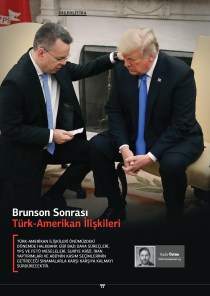
Brunson Davası Sonrası Türk-Amerikan İlişkileri

Bu yazı ilk olarak 21 Ekim 2018 tarihinde Kriter‘de yayınlanmıştır.
Download PDF

Brunson davasının Trump yönetimiyle bu kadar ciddi bir kriz yaratmasını 15 Temmuz darbe girişiminin Türk-Amerikan ilişkilerinde yarattığı ağır tahribatın sonuçlarından biri olarak görmek mümkün. Darbe girişimi sırasında ve hemen sonrasında Washington’un darbeye karşı çıkmada ‘bekle gör’ olarak algılanan tavrı Ankara’yla derin bir güven krizi doğurdu. Obama yönetimi yetkililerinin yaptığı açıklamalar FETÖ liderinin darbeden sorumlu tutulması ve hukuki olarak gereğinin yapılacağı konusunda Türkiye’ye güven vermedi. Bu tavır ABD’nin Türkiye’nin ulusal güvenlik tehdidi olarak gördüğü ve terör örgütü olarak tanımladığı FETÖ’yü koruduğu şeklinde algılandı. Bunun üzerine Suriye’de YPG’ye verilen Amerikan desteğinin artarak devam etmesi ikili güven ilişkisini en alt seviyelere indirdi. Türkiye’nin doğrudan mücadele ettiği iki örgütün ABD tarafından desteklenen görüntüsü Obama döneminin en kötü mirası oldu.

Bu durum Brunson davasında etkisini göstererek karşılıklı güven inşa edilmesini zorlaştırdı. Trump yönetiminin hukuki süreçleri görmezden gelerek Türkiye’ye adeta bir ültimatom vermesi Amerikan iç siyasi dinamikleri ve Başkan Yardımcısı Pence’in baskısıyla doğrudan bağlantılıydı. Buna rağmen, bahsettiğimiz karşılıklı güvensizlik daha sağlıklı bir diyalog kurulmasının önüne geçti. Brunson’ın suçlu bulunması sonrasında tahliye edilmesi Başkan Trump’ı son derece memnun etti ve Türkiye’ye yönelik pozitif bir söyleme dönmesini sağladı. Yine de bu durum Türk-Amerikan ilişkilerindeki güvensizliğin temel nedenlerinin ortadan kalktığı anlamına gelmiyor. İlişkilerin daha sağlıklı bir zemine oturabilmesi için hem Trump yönetiminin bazı adımlar atması (Türkiye’nin bakanlarına uyguladığı yaptırımları, çelik ve alüminyuma ek vergileri kaldırması gibi) hem de iki tarafın bu güvensizliği ortadan kaldırmak için özel bir çaba sarf etmesi gerekecek. Brunson davasının bir hukuki mesele olarak değerlendirilmesini imkânsız kılan dinamiklerin ortadan kaldırılması için aktif bir çaba gösterilmesi her iki ülkenin de çıkarına olacaktır.

Suriye’de Yakınlaşma İhtimali

Suriye meselesi Türk-Amerikan ilişkilerini önümüzdeki dönemde zorlayacak en ciddi sorunlar yumağını barındırıyor. İki tarafın genel olarak Suriye politikalarında ciddi farklılıkların devam etmesine ilaveten ABD’nin Kuzey Suriye’de YPG’ye yatırım yapmaya devam etmesi karşılıklı güvensizliğin devamını garanti ediyor. Obama yönetimi YPG’ye yardımı DEAŞ’la mücadele kapsamında geçici ve sınırlı bir destek olarak tanımlayarak Türkiye’yi yatıştırmaya çalışmış ancak bunda başarılı olamamıştı. Trump yönetimi ise bu politikayı devam ettirdi ancak DEAŞ’ın artık hâkim olduğu bir toprak bütünü kalmadığı bir ortamda YPG desteğini İran’ın etkisini kırma amacına binaen meşrulaştırıyor. YPG’nin İran’a karşı harekete geçmeyeceği aşikar olduğu için bu konuda Türkiye’nin derin rahatsızlığı ve şüpheleri devam edecek.

Daha önce Türkiye’de elçilik görevinde bulunmuş ve Türkiye’nin hassasiyetlerini ve politikalarını en iyi anlayan isimlerden biri olan James Jeffrey’nin Trump yönetimi tarafından Suriye özel temsilcisi olarak atanması küçük de olsa bazı fırsatlar doğurabilir. Esed rejiminin Rusya’nın desteğiyle İdlib’e girme tehdidi savurduğu ve Türkiye’nin yoğun bir diplomatik çabayla bunu engellediği bir dönemde Washington’dan Türkiye’nin pozisyonuna destek veren açıklamaların gelmesinin olumlu bir etki yarattığını söylemek mümkün. Trump yönetiminin Esed rejimini uyaran sert söyleminin Türkiye’nin elini güçlendirdiğini, Jeffrey’nin atanmasıyla Türkiye’yle birlikte çalışma iradesinin oluştuğunu ve en son Menbiç’te ortak devriyelerin başladığını düşündüğümüzde, Suriye konusunda Türk-Amerikan ilişkilerinin pozitif ivme kazanmasının mümkün olduğunu söyleyebiliriz. Ancak YPG’ye Amerikan desteğinin ciddi bir sorun olmaya devam edeceği kesin.

Trump yönetiminin yakın zamanda açıkladığı Suriye politikasının temel stratejik hedefinin İran’ın bölgesel etkisini kırmak olduğu biliniyor. Ancak bu hedefi somut olarak hayata geçirmek adına nasıl adımlar atacağı belli değil. İran’a karşı Türkiye’yi Suriye’de yanına almak isteyen Trump yönetiminin YPG meselesinde nasıl güvenceler verebileceği de belirsizliğini koruyor. Türkiye İran’ın Suriye’deki etkisinden elbette memnun değil ve bu etkinin azaltılması Türkiye’nin elini güçlendirir. Suriye meselesinin siyasi çözümü konusunda da Türkiye’nin masaya daha güçlü gelmesini sağlayabilir. Ancak PYD’nin bu siyasi çözüm sürecine katılmak istemesi ve ABD tarafının bunu makul bulması Ankara’yla Washington arasındaki Suriye yakınlaşmasını zora sokacaktır.

İran Yaptırımları

Obama döneminde Türk-Amerikan ilişkilerinin karşılaştığı en önemli sınamalardan biri İran nükleer meselesi olmuştu. Türkiye’nin BMGK geçici üyesi olarak 2010’da verdiği hayır oyu Ankara’ın ekseni kayıyor tartışmasının alevlenmesine yol açmıştır. Türkiye savaşa varacağı kaygısıyla ABD’nin yaptırım politikasına karşı çıkmış ve arabuluculuk yapmaya çalışmıştır. 2015 yılında varılan İran nükleer anlaşmasını destekleyen Türkiye, anlaşmanın Trump yönetimi tarafından iptalini de eleştirmekten geri durmamıştır. Her ne kadar Suriye konusunda karşıt konumda bulunsa da Türkiye İran’a askeri müdahaleye gidecek bir yola girilmesini istemiyor. Şimdilerde Trump yönetiminin İran’ı izole ederek yaptırımlara boğmaya çalışırken Avrupa’dan destek alamaması elini zayıflatıyor.

Türkiye’nin geçmişte olduğu gibi enerji ihtiyaçları dolayısıyla İran’dan petrol ve doğalgaz ihracına devam edeceğini açıklaması sonrasında Trump yönetiminin Türkiye’yi yaptırımlardan muaf tutmak için adım atması bekleniyor. Kasım başında uygulanması beklenen yaptırımların Türkiye’ye karşı da geçerli olması durumunda ikili ilişkilerin yeni bir kriz dönemine girmesi kaçınılmaz olacaktır. Trump yönetiminin yeni Suriye politikasında Tahran’ı geriletmeyi stratejik hedef olarak tanımlayıp Türkiye’yi yanına almak istemesinin doğal sonucu Türkiye’yi İran yaptırımlarından muaf tutması olmalıdır. Aksi takdirde Türkiye’nin ekonomisi olumsuz etkilenecek ve Ankara Washington’un Türkiye’yle çalışma konusundaki ciddiyetine inanmayacaktır.

Ortadoğu’da Güç Mücadelesinin Etkileri

Son birkaç haftadır yaşanan Kaşıkçı olayı, Ortadoğu’daki bölgesel güç mücadelelerinin Türk-Amerikan ilişkilerini doğrudan etkileyebileceğinin yeni bir örneği oldu. Gazeteci Kaşıkçı’nın basına sızdırılan detaylarda göründüğü itibarla İstanbul’da hunharca katledilmesi, Suudi veliaht Muhammed bin Selman’ın Trump yönetimiyle geliştirmeye çalıştığı sıkı ilişkiyi korumak ve bunu bölgedeki güç mücadelesinde kaldıraç olarak kullanmak için neler yapabileceğini gösteriyor. Selman’ın kendi ifadesiyle Türkiye’yi İran ve İhvan’la birlikte bir ‘şeytan üçgeninin parçası’ olarak görmesi ve Birleşik Arap Emirlikleri ve Mısır’ı yanına alarak Amerikan desteğiyle bölgede ‘karşı-devrim’ bloğunu güçlendirmeye çalıştığı görülüyor. Arap Baharı’nı Arap Kış’ına döndürmeyi hedefleyen bu bloğun İsrail tarafından tercih edildiği ve son zamanlarda Suriye’de de Türkiye’nin aleyhine çalıştığı biliniyor.

Türkiye’nin Kaşıkçı olayında öncelikle ABD’yi ve bütün uluslararası kamuoyunu denkleme dahil etme stratejisi son derece başarılı oldu. Türkiye’nin başından beri iyi niyetli olmadığı yönündeki yorumlar boşa çıkmakla kalmadı, Batı medyası cinayeti örtbas etmediği için Türkiye’ye teşekkür etti. Trump başından beri Suudilere bir açıklama yaparak işin içinden sıyrılmaları için açık bir kapı bıraktı ve bu nedenle Amerikan kamuoyunun sert tepkisini çekti. Kasım seçimlerine az bir zaman kala hem de ekonomi bu kadar iyi giderken Trump’ın Amerikan medyasının iki haftadan fazladır Kaşıkçı cinayetine odaklanmasından rahatsız olduğu aşikâr. Suudileri cezalandırmak adına Kongre’nin istediği gibi sert bir adım atması çok zayıf bir ihtimal olsa da Kasım seçimleri sonrasında Kongre’deki dinamiklerin değişmesi Trump’ı buna mecbur bırakabilir.

Kaşıkçı cinayeti Veliaht Prens Selman’ın çok ciddi paralar harcayarak ABD’de oluşturmaya çalıştığı ve Yemen savaşı nedeniyle inşa etmekte zaten zorlandığı modernleşmeci lider imajını tamamen yerle bir etti. Suudi ekonomisini yeniden inşa etmeye çalışan, kadınlara araba kullanma özgürlüğü tanıyan, bölgede İsrail’le çalışmaya hazır modernleşmeci lider imajına zarar veren Kaşıkçı’ya tahammül edememesi Selman’ın alanının son derece sınırlanmasına yol açtı. Kral olması bile tartışmaya açılan bu süreçte gösterdiği siyasi basiretsizlik önümüzdeki yıllarda Suudi Arabistan’ın bölgede istikrarsızlık kaynağı yeni bir dinamik yaratacağına işaret ediyor. Böyle bir istikrarsızlığın yeni bölgesel kriz alanları ve çatışma yaratması ve Türk-Amerikan ilişkilerinin de bundan nasibini alması kaçınılmaz.

Kasım Seçimleri Ne Getirir

Trump yönetimiyle birlikte Amerikan iç siyasetinin dış politikaya etkisi çok daha bariz hale geldi. Popülist bir lider olarak hemen hemen bütün dış politika meselelerini iç siyasette kullanarak ‘pazarlığa açan’ Trump, iç politikanın ihtiyaçları doğrultusunda Türkiye de dahil olmak üzere birçok müttefikiyle ilişkisinde inişli çıkışlı bir dönem yaşanmasına sebep oldu. Türkiye adına bunun en somut örneği Evanjelist tabanın son derece önem verdiği Brunson meselesi oldu. Brunson’ın tahliye edilmesinin pozitif etkisi olacağını söylemiştik ancak Trump’ın iç politika çıkarlarının önümüzdeki dönemde de etkili olacağının altını çizmek gerekiyor.

Kamuoyu araştırmaları Kasım seçimlerinde Kongre’nin üst kanadı Senato’da çoğunluğun Cumhuriyetçilerde kalacağını ancak alt kanadı Temsilciler Meclisi’nde çoğunluğun büyük ihtimalle Demokratlara geçeceğini gösteriyor. Bu senaryoda Trump’ın politikalarına güvensizlik oyu verilmiş olacak ve başkanı görevden azil süreci başlatmak için sabırsızlanan Demokratları harekete geçirecek. 2020’ye giden yolda Trump’ın bütün politikalarını kadük etmek isteyecek Demokratların dış politikada da özellikle Suudilerle ilişkilerini sorun haline getirmesini beklemek gerekiyor. Demokratların başkana bu gibi konularda baskı yapması Trump’ın dış politikada daha agresif bir tavır alarak güç gösterisinde bulunmaya çalışması sonucunu doğurabilir.

Kongre’de Demokratların etkisinin artmasının Türk-Amerikan ilişkilerine doğrudan etkisini kestirmek zor olsa da Kongre’de özellikle Brunson meselesi yüzünden hazırlanan Türkiye aleyhindeki tasarıların tekrar gündeme gelmesi söz konusu olabilir. Bu durumda Trump’ın Beyaz Saray’ın geleneksel olarak Türkiye’yle ilişkileri Kongre’den uzak tutmak isteyen tavrının nereye kadar devam edeceğini tahmin etmek zor. Yani Başkan Trump’ın Brunson konusunda olduğu gibi Kongre’den gelebilecek baskının iç siyasette kendini ne kadar zor durumda bıraktığına bağlı olarak Türkiye’ye sert tavır takınması çok uzak bir ihtimal değil.

Türk-Amerikan ilişkileri önümüzdeki dönemde Halkbank gibi bazı dava süreçleri, YPG ve FETÖ meseleleri, Suriye krizi, İran yaptırımları ve ABD’nin Kasım seçimlerinin getireceği sınamalarla karşı karşıya kalmayı sürdürecektir. Brunson’ın suçlu bulunduktan sonra tahliye edilmesinin yarattığı olumlu havanın bütün bu meseleleri çözmeye yetmesi imkânsız ancak Amerikan tarafında uzun süredir görmekte zorlandığımız Türkiye’yle çalışma iradesinin güçlenmesi durumunda pozitif bir dinamik oluşabilir. Bu dinamiğin sağlıklı ve kalıcı kurumsal bir düzleme oturtulmaması durumunda ikili ilişkilerde kırılganlık ve bölgesel meselelerde strateji farklılıklarını öne çıkmaya devam edecektir.
Turkey-US Relations Post-Brunson

This article was first published by The New Turkey on October 16, 2018.

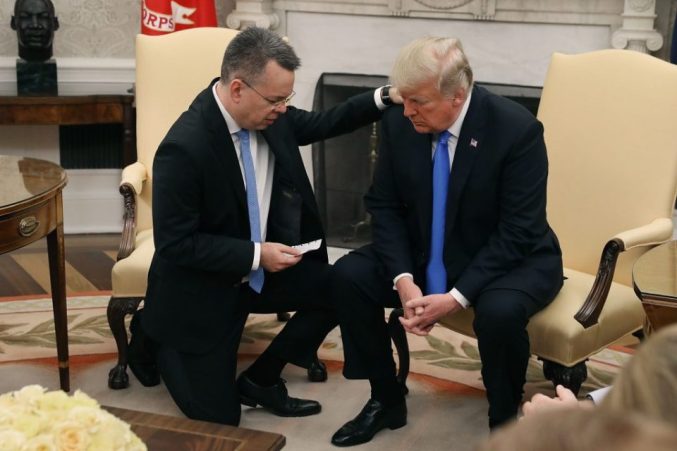
Brunson’s return to the U.S. and President Trump’s hosting of the pastor in the oval office with high level administration officials sends a strong message to the Evangelical base ahead of the midterm elections in November. Not that Trump risked losing the support of the Evangelicals, but Brunson’s return gives his standing with Evangelical supporters a big boost.

brunson sonrasi opinion.jpg

In the first year of President Trump’s tenure, Turkish-American relations went through what we can call a period of “sizing up,” as hopes for a new beginning were somewhat moderated by strategic challenges. The Trump administration had inherited the Obama policy of supporting “local forces” (read YPG) against Daesh with no U.S. boots on the ground save for the “military advisors.” Turkey was patient in Trump’s first year to allow the administration some time to re-evaluate the mission and start working with Turkey instead of the PKK’s Syrian branch. When it became clear that the Trump administration would settle on the same policy, Turkey launched a military operation in Afrin to ensure the YPG forces would not go west of the Euphrates river.

The serious divergence on the ground in northern Syria has continued, but efforts to put the U.S.-Turkey relationship back on track also continued, as outstanding legal cases (Brunson and Zarrab cases) were compartmentalized away from broader policy questions. However, the pressure from the Evangelical base of the Trump administration led to an ill-timed ultimatum by President Trump and Vice President Pence, resulting in yet another bilateral crisis.

As a result of the pressure, the U.S. imposed sanctions against Turkish ministers and additional steel and aluminum tariffs, a first against a NATO ally. These measures appeared to be largely symbolic, but they had a serious impact on the Turkish Lira’s devaluation against the U.S. dollar. As Turkey refused to bow down to such economic pressures, the relationship came to the brink of total breakdown. Clearly, the Brunson case was a major catalyzer in this process, but the underlying strategic disagreements and the already existing mutual distrust has created a fertile ground for a major crisis.

With the Turkish courts deciding to release Pastor Brunson last week, however, an important new phase might just be starting in the bilateral relationship. Brunson’s return to the U.S. and President Trump’s hosting of the pastor in the oval office with high level administration officials sends a strong message to the Evangelical base ahead of the midterm elections in November.

Not that Trump risked losing the support of the Evangelicals, but Brunson’s return gives his standing with Evangelical supporters a big boost. Turkish leadership has maintained the legal process played itself out and both sides insisted there was no specific deal. We should note that there does not need to be a deal for this development to have a positive impact on the U.S.-Turkey relationship.

The fact that a legal case derailed the relationship between two NATO allies should give everyone a pause. It underscores the complexity of the strategic environment in Turkey’s immediate neighborhood and heightened security concerns Turkey feels as a result of U.S. policies in the region. President Trump’s positive remarks about Turkey reflect his concern over his standing with the Evangelical voters, but this will not be enough for a broader strategic conversation between the U.S. and Turkey.

The recent changes in the U.S. Syria policy have given at least a limited amount of reassurances to Turkey that its interests would be taken into consideration more carefully. The U.S. rhetorical support for Turkey against an imminent military operation against Idlib was a welcome development in this sense. Yet, without a more comprehensive policy coordination between two sides, the mutual skepticism will continue, especially as the U.S. continues to support the YPG.

The upside for the relationship is that the “sizing up” period may be over and both sides are much clearer about their positions. The ambiguities regarding northern Syria as well as the uncertain fate of the Brunson case are no longer excuses for the lack of an honest dialogue. The regional crises will almost certainly create new challenges and the U.S.-Turkey ties will be tried. The lesson from the Brunson case is that Turkey will not bow to threats and pressures, and that the U.S. will need to pursue diplomatic options instead. Going forward, a talk-first-shoot-later approach will have to win for a healthier U.S.-Turkey relationship.

What are the Implications of America’s New Syria Policy for Turkey?

This article was first published by The New Turkey on October 10, 2018.

The U.S. policymakers in charge of the Syria policy would like to see Turkey enlisted on their side in their push back against Iran in the region and they must see an interest in alleviating at least some of the Turkish concerns.

10 ekim kadir hoca opinion.jpg

The disagreement over the control and status of the Syrian town of Manbij has been a symbol of the strategic differences between the U.S. and Turkey’s Syria policies for a while now. Turkey’s successful military operation in Afrin led to the announcement of a roadmap over Manbij, which relatively calmed down U.S.-Turkey tensions. However, the U.S. continued to support the PKK-affiliated YPG forces in a stated mission to deny a return to Daesh in northern Syria.

With Daesh no longer holding territory, this mission did not appear to provide convincing rationale for a prolonged American presence on the ground. More recently, the U.S. ended its ambiguity by announcing an open-ended presence in Syria declaring a mission to limit Iranian influence in Syria as part of a broader strategy to confront Iran in the region.

With this critical shift in strategy, the U.S. commitment to northern Syria seems to be set in motion for the long term. One of the first concrete outcomes of this change appears to be the administration’s stern warnings against a regime operation against Idlib, which would have caused yet another humanitarian catastrophe.

Turkey sent reinforcements to its observation posts in and around Idlib to prevent the regime from an easy takeover while lobbying Russia to prevent such an operation. The U.S. rhetoric against the looming operation may have helped Turkey’s case, convincing Russia to hold off at least for a period of time in return for the Turkish promise to push terror groups out of Idlib.

Another consequence of the U.S. policy change seems to be the announcement that the PYD would no longer negotiate with the Assad regime. This step seems to be aimed at softening the Turkish argument that the U.S. should not trust the PYD, which would work with the Assad regime, Iran or Russia depending on its needs. This argument still holds true despite the PYD’s obvious tactic to appease its American supporters, who are clearly concerned about the degree to which the regime is supported by Iranians.

The PYD has played a critical role in the PKK’s regional ambitions by opening the door for legitimacy in the international arena despite Turkey’s warnings. Turkey has been able to limit the PYD’s forays into the western side of the Euphrates but the area it continues to control remains a major concern for Turkey.

The U.S. policymakers in charge of the Syria policy would like to see Turkey enlisted on their side in their push back against Iran in the region and they must see an interest in alleviating at least some of the Turkish concerns. This kind of willingness to work with Turkey and the most recent announcement of joint Turkish-American patrols around Manbij can help rebuild confidence between the two NATO allies.

Nevertheless, we should be clear-eyed about the reality on the ground of the U.S. support for the PYD, which is considered by Turkey as a direct security threat. This will continue to be the Achilles’ heel in the U.S.-Turkey bilateral relationship. The PKK understands this and will seek to exploit it for its interests.

Turkey feels more confident after its Afrin operation, the Manbij agreement with the U.S., and the successful diplomatic effort to prevent the Assad regime from launching a major military assault against Idlib, supported at least rhetorically by Washington. These are strong signs for a renewed dynamic that takes into consideration Turkey’s interests and concerns. But once again, American support for the YPG continues to be the underlying fundamental strategic divergence between the two allies, with significant potential to undermine any positive momentum.

Towards a New International System Without US Leadership

This article was first published by The New Turkey on October 2, 2018.

In the years ahead, if it decides to return, U.S. global leadership will find itself in an environment that has fundamentally changed. The emergence of regional cooperation mechanisms and mini-alliances based on a variety of issues will create realities that will not be easy to replace.

Towards a New International System Without US Leadership

There has been a lot of debate about the current U.S. unwillingness to lead the liberal international order it created after World War II. The Obama administration already displayed signs of war weariness, which often translated into no action in conflicts like Syria. On issues that he cared about the most, the Iran nuclear issue and climate change, President Obama worked hard to build international consensus through multilateral institutions in the international system. However, the U.S. was already hesitant to provide leadership on a whole host of issues, particularly in matters of war and peace.

Having run on the theme of “America First,” the Trump administration has transformed this hesitation to what many would call hostility against internationalism and the global institutions themselves. From NATO to NAFTA, military and economic multilateral institutions and agreements have been targeted by President Trump. Traditional allies have been threatened with tariffs and economic pressure unless they agree to deals that would no longer “take advantage” of the U.S. It would be misleading to label this attitude isolationism per se. The Trump administration has been insisting that these international institutions and agreements be made to serve U.S. interests even if it is at the expense of international liberal order.

Just as we saw in the case of the Obama administration’s reluctance to lead, we are now witnessing the Trump administration’s resentment against the international system and that the U.S. is reconsidering its global role. Clearly, both administrations provided no comprehensive answers to the leadership question and both of their approaches have been subject to heavy contestation from both the left and the right domestically. Furthermore, more often than not, the Trump administration’s admonishment of the international system has subsided with rather superficial adjustments (NATO members’ promise to increase their national defense budget to 2%) or renegotiated trade deals (U.S.-Mexico-Canada Trade Agreement instead of NAFTA). The lesson here is that neither the Obama nor Trump administration has addressed the global leadership question in a comprehensive manner.

The message to the world has been that the U.S. has been rethinking its global role in a rather confused and haphazard manner. At times, the somewhat ideological assertion of national sovereignty seems to take priority whereas, at other times, satisfying some domestic constituency seems to suffice. The response of both the allies (the EU and others) as well as potential rivals (China) have been an interesting one. Nobody seems willing to sit and wait for the U.S. to “come to its senses.”

Allies are thinking of ways to live without the U.S. leadership, recognizing that they may even have to confront the U.S. along the way. The rebuff President Trump received from the UN Security Council a special session on Iran, which was instructive in this sense. Potential competitors like China, on the other hand, are working hard to minimize the economic impact of the impending trade wars by strengthening their regional relationships. In many ways, the world is not waiting for the U.S.

Turkey, as a traditional ally, has had to adjust to the regional realities with minimal or no serious U.S. leadership on a variety of issues including the Syrian crisis. In order to protect its national security and economic interests in the region by minimizing the detrimental impact of the Syrian conflict, Turkey has worked with Russia and Iran on the diplomatic and strategic fronts, the EU on the humanitarian front, and the U.S. on the political front.

The days of alignment with a clearly identified bloc of nations are long gone. Creating a strategy based on the realities on the ground and one that accommodates some of the priorities of the regional powers has become a routine part of policymaking. The most recent rapprochement with Germany can be given as an example of an effort to “bring Europe in” in the absence of robust U.S. leadership.

In the years ahead, if it decides to return, U.S. global leadership will find itself in an environment that has fundamentally changed. The emergence of regional cooperation mechanisms and mini-alliances based on a variety of issues will create realities that will not be easy to replace.

Providing a global framework for action will be ever more difficult since many countries, both allies and rivals, will have pivoted away on a whole host of strategic and economic issues. The U.S. will continue to enjoy great capacity to shape world events, alliances and institutions for the foreseeable future but it will find it increasingly challenging to lead given the legacy of these intervening years with minimal serious U.S. role.