Tag Archives: Syria

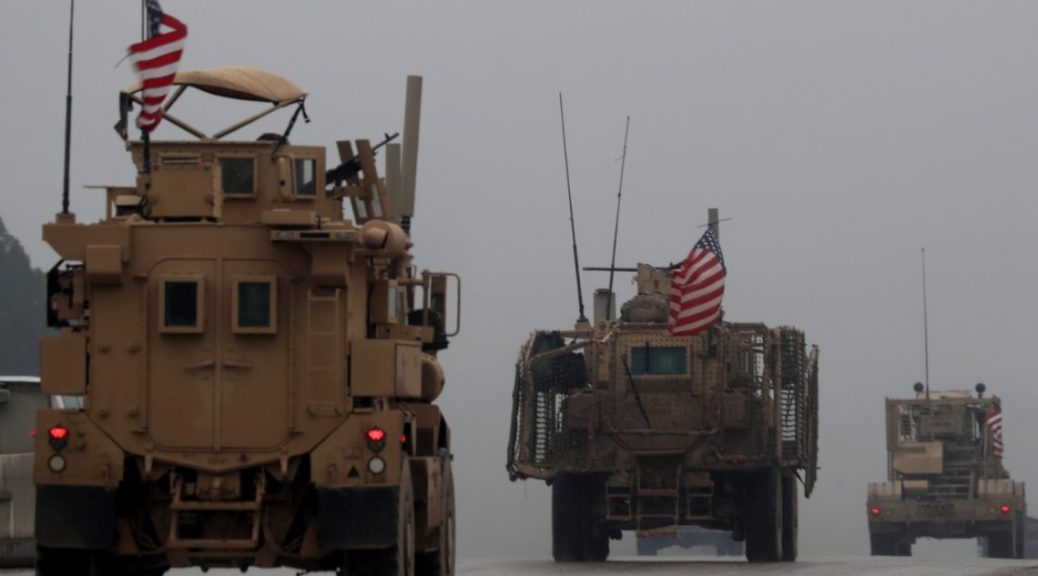
Taking Stock of the Syria Withdrawal Decision

This article was first published by New Turkey on January 23, 2019.

The Syria withdrawal decision is criticized on many fronts but most critics complain more about the style and timing than the substance of it. More importantly, they have failed to propose a realistic policy goal that justifies an indefinite U.S. presence.

The Syria withdrawal decision continues to stir a highly politicized debate among foreign policy professionals, including former and current government officials. Several arguments are made against the President’s decision but none of them provide a strong rationale for an open-ended American military presence in northern Syria. These critics also forget that the continued U.S. military presence in northern Syria and the support for the YPG were becoming increasingly unsustainable in the face of Turkish opposition. The decision actually opened up possibilities for a robust U.S.-Turkey cooperation on the ground to achieve sustainable stability and a truly enduring defeat of Daesh.

One of the most repeated anti-withdrawal arguments, articulated by the former U.S. envoy for the anti-Daesh coalition, is directed against the President’s declaration that Daesh is defeated. Ignoring the fact that Daesh no longer controls territory in northern Syria, proponents of this view argue that Daesh is far from defeated. They cite the most recent terrorist attack in the town of Manbij as a perfect example of what happens if the U.S. leaves. Yet, critics fail to provide a definition of what would constitute a defeat of Daesh and in what time frame they expect to reach that goal. Daesh or its remnants in one form or another may survive and pose a threat but it is in no way comparable to holding territory and declaring a caliphate. Moreover, Turkey has been committed to the lasting defeat of Daesh, exemplified by the thousands of Turkish soldiers on the frontlines.

It should also be remembered that the U.S. “partners” on the ground, the PKK-linked YPG forces, have not shied away from subtle threats in an effort to delay and complicate an American departure for their political purposes. The U.S. policymakers, since the fall of 2014, have ignored the regional political game the YPG/PKK has been trying to play. Their bid to present themselves as the “most effective fighting force” against Daesh was meant to legitimize themselves in the eyes of the U.S. despite Turkish opposition. Turkey has been adamantly against the U.S. investment in the YPG and the opponents of the Syria withdrawal continue to underestimate Turkish determination to curb the political aspirations of the Syrian branch of the PKK. This dynamic presented the U.S. with a clear choice between partnering with a recycled terror group and working with a NATO ally.

Another argument leveled against the withdrawal decision has been that the U.S. would lose credibility vis-a-vis potential future partners. “Abandoning Kurds” has become a phrase thrown around rather easily, without making a distinction between different Kurdish groups. The phrase has curtailed the fact the YPG has been opposed to rights of Kurdish groups not aligned with the PKK. The question of the U.S. one day leaving the region is not a new one and the YPG has sought to hedge against that possibility from day one, as they sought an understanding with the Assad regime as well as with Russia. It is no surprise for them nor for any serious student of local and regional dynamics.

The Syria withdrawal decision is criticized on many fronts but most critics complain more about the style and timing than the substance of it. More importantly, they have failed to propose a realistic policy goal that justifies an indefinite U.S. presence. It is also unconvincing that the U.S. could achieve some of the geopolitical goals, such as countering Iran, with such a small force in northern Syria. The argument for not leaving a vacuum that might be filled by Russia also lacks weight since the U.S. has already allowed Russia to play a much larger role since the Obama administration. The direct consequence of the decision will actually be working with Turkey. In this sense, the most critical aspect of the withdrawal decision might just be that the U.S. is deciding to work with its NATO ally in a serious way to achieve lasting stability in northern Syria.

EU-Turkey Refugee Agreement: Too Big to Fail

This analysis was coauthored by Lesley Dudden and Kadir Ustun and published by The SETA Foundation on June 5, 2017.


The analysis outlines the process through which the EU-Turkey Joint Action Plan (JAP) on refugees came into being and examines the impact of the agreement, including its challenges and successes.


The migrant crisis that has stemmed from the ongoing strife in the MENA region is one of the most devastating and consequential crises of modern times. Its impact has been felt across continents, in countries such as Turkey, Lebanon and Jordan, along with European Union member states and the United States. In addition to unprecedented regional humanitarian challenges, the crisis shook Europe to its core by challenging its political institutions and humanitarian values. The rise of populism and Islamophobia in the West in general is closely associated with the migrant crisis that has pushed the capacity of countries to their limits.

Perhaps no relationship has been more affected by the refugee crisis than that between the European Union and Turkey. EU-Turkey relations have been strained and undermined by the migrant crisis to such a degree that it seems to have created a “make or break” moment in Turkey’s EU accession talks. This analysis outlines the process through which the EU-Turkey Joint Action Plan (JAP) on refugees came into being and examines the impact of the agreement, including its challenges and successes. It also seeks to understand how heightened tensions between the EU and Turkey will affect the longevity and effectiveness of the agreement.

Introduction

The migrant crisis that has stemmed from the ongoing strife in the MENA region is one of the most devastating and consequential crises in modern times. Its impact has been felt across continents, in countries such as Turkey, Lebanon and Jordan, along with European Union (EU) member states and the United States. In addition to unprecedented regional humanitarian challenges, the crisis shook Europe to its core by challenging its political institutions and humanitarian values. The rise of populism and Islamophobia in the West in general is closely associated with the migrant crisis that has pushed countries capacities to their limits.

Perhaps no relationship has been more affected by the refugee crisis than that between the EU and Turkey. EU-Turkey relations have been strained and undermined by the migrant crisis to such a degree that it seems to have created a “make or break” moment in Turkey’s EU accession talks. Yet, the survival of the agreement indicates that benefits derived from stabilization of the large refugee influxes and illegal crossings do exist. This analysis outlines the process through which the EU-Turkey Joint Action Plan (JAP) on refugees came into being and examines the impact of the agreement, including its challenges and successes. It also seeks to understand how heightened tensions between the EU and Turkey will impact the longevity and effectiveness of the agreement.

Download the Report

It’s time for the US to stop alienating its allies

This article was first published in Al Jazeera English on May 6, 2017.


Turkey’s air strikes on PKK-affiliated groups in Iraq and Syria should be a wake-up call for the Trump administration.


Turkey’s April 25 air strikes against Kurdistan Workers’ Party (PKK) positions in Iraq and its affiliate People’s Protection Units (YPG) in Syria were unexpected, but should not have surprised anyone.

Turkey has consistently maintained that the PKK’s presence in Iraq’s Sinjar region was unacceptable. Only two months into the Euphrates Shield Operation back in October 2016, President Recep Tayyip Erdogan pledged that Turkey would not tolerate Sinjar to be the “new Qandil”, referring to the terror group’s base of operations in northern Iraq.

While Turkish officials repeated their opposition to PKK’s presence in Sinjar several times, officials from the Kurdish Regional Government (KRG) also asked the PKK to leave the area.

Early in March 2017, clashes broke out between the PKK-linked Yazidi militia and the KRG’s Peshmerga fighters, a sign of increased tensions among Kurdish groups fuelled by the PKK’s lingering presence in the region.

Qandil mountains are located along the Iraq-Iran border in northeastern Iraq. The PKK have long been taking advantage of the mountainous terrain and using its bases there to train, plan attacks, and provide logistical support to its fighters. A similar base in Sinjar would help the PKK to operate in northwestern Iraq – an area near the Syrian border which is critically important for the fight against the Islamic State of Iraq and the Levant (ISIL, also known as ISIS). US military planners must be betting on the promises of the PKK-linked Sinjar Resistance Units to help cut off ISIL’s route between Mosul and Raqqa.

A strain on US-Turkey relations

Turkey is opposed to not only PKK’s influence in the region, but also the US’ apparent tactical decision to utilise the PKK against ISIL. Turkey prefers a combination of Peshmerga forces and Free Syrian Army fighters to take the lead in the fight against ISIL, as these groups pose no threat to Turkey’s national security.

The PKK, on the other hand, has not only continued to conduct attacks against Turkey but has also sought to establish an autonomous region in northern Syria through its Syrian affiliate, the Democratic Union Party, by making deals with prominent actors in Syria’s war, including Russia.

Creating a hub and a base for its operations in Sinjar is critical for the PKK, but actualisation of this plan would ironically violate the Iraqi-Syrian border – just like ISIL attempted to do in the past.

US military leaders seem to consider the PKK affiliates in Iraq and Syria as allies in the fight against ISIL.

The US Central Command went even further than that and is now reportedly patrolling the Syrian-Turkish border to discourage escalation and violence between two of its “most trusted partners in the fight to defeat ISIL”.

The US military did not hide its displeasure with the Turkish air strikes against the PKK and its affiliates in Iraq and Syria despite the fact that the US and Turkey are supposed to be part of the same anti-ISIS coalition. At the same time, neither President Trump, nor US officials at the cabinet level, have made any statements against Turkish operations.

The forthcoming meeting between US President Donald Trump and his Turkish counterpart will surely involve extensive discussions around the US-Turkey strategic disconnect in the fight against ISIL and the PKK’s influence on the ground. It will be a challenge, however, to resolve this issue in one meeting.

Two sides will need to talk more often and in-depth about a military plan to root out ISIL but also, and more importantly, they will need to agree on a political plan that would establish stability on the ground in a post-ISIL scenario. Unfortunately, the anti-ISIL coalition’s efforts have been largely tactical and created space for non-state actors such as the PKK to take advantage of a security vacuum spanning Iraq and Syria.

There are signs that the Trump administration may be working on a more thoughtful approach that prioritises long-term strategies over short-term tactical gains.

It is not clear, however, if this new approach will translate into actual policy. So far, the White House has not made a political decision on whether to arm the YPG directly and include them in operations to liberate Raqqa from ISIL. Turkey has presented multiple proposals that exclude the YPG from the Raqqa operation and replace them with local Arab forces supported by Turkish troops.

Any scenario that empowers and legitimises PKK’s affiliates will certainly strain US-Turkey relations and risk weakening anti-ISIL operations. It is clear as a result of the April 25 operations that Turkey is determined to limit the reach and influence of the PKK and its affiliates on national security grounds. Beyond Turkey’s own national security requirements, it is difficult to see how allowing the PKK to control Arab-majority towns and to establish an autonomous region in northern Syria contributes to long-term stability.

The Trump administration needs to go beyond tactical wins and take its time to create a more careful strategy both to avoid alienating key allies, such as Turkey, and to conduct a sustainable anti-ISIL campaign.

Kadir Ustun is the Executive Director of the SETA Foundation in Washington, DC.

The views expressed in this article are the author’s own and do not necessarily reflect Al Jazeera’s editorial policy.

The US must heed Turkish concerns in Syria

This article was first published in Al Jazeera English on March 15, 2017.


If the US insists on supporting the YPG against Turkey’s wishes, Syria’s post-ISIL stability is going to be in peril.


United States Senator John McCain has it right that the US has underestimated and, at times, disregarded Turkey’s concern over its support for the People’s Protection Units (YPG) in Syria. The US’ rationale for helping the YPG was predicated on a flawed anti-ISIL strategy that shied away from a comprehensive approach.

Turkish discomfort with the US support for the YPG is not based on an opposition against Syrian Kurds. Despite their efforts to promote themselves as the representatives of Syrian Kurds, the YPG poses a direct national security threat to Turkey.

The group is the Syrian arm of the Kurdistan Workers’ Party (PKK) – designated by Turkey, the US, and the European Union as a terrorist organisation – which has been fighting the Turkish government since 1984.

The two groups’ close ties have previously been acknowledged by US officials including the former US Defense Secretary Ash Carter in a Senate Armed Services Committee hearing.

The YPG draws much of its tactical and strategic direction as well as resources from the PKK and arms given to the YPG directly threaten Turkey, as they can be passed onto PKK fighters inside Turkey.

In other words, continued US support for the YPG lends legitimacy to the Syrian extension of a terror organisation threatening a NATO ally.

‘A misguided policy’ 

The US appears set to move forward with arming and supporting the PKK-linked YPG in preparation for the Raqqa operation.

This is not only the continuation of a misguided policy left over from the Obama administration, but it also risks irreparable damage to US’ relations with Turkey, a critical ally in the fight against the Islamic State of Iraq and the Levant (ISIL, also known as ISIS).

Turkey has been quite hopeful about a potential change in Syria policy under the Trump administration, but all indications are that the new US administration’s Syria policy is also dominated by the fight against ISIL.

Under Donald Trump, the Pentagon is focused on achieving a victory against ISIL by working with “local partners” and limiting American “boots on the ground”. which is a continuation of the Obama administration’s strategy.

This approach disregards Turkey’s concerns and spells instability and unpredictability after dislodging ISIL from Raqqa and northern Syria.

The Obama administration invested in developing relations with the PKK-linked YPG fighters in Syria under the pretext that they were the only effective fighting force on the ground to fight ISIL.

This view ignored the political ambitions of the Democratic Union Party (PYD), the political umbrella organisation of the Syrian Kurds, to create a de facto autonomous region in northern Syria and, perhaps inadvertently, emboldened the PKK against Turkey, as it sought international support and legitimacy.

It also failed to acknowledge the demographic engineering efforts or the human rights abuses of the PYD that sought to push out Arab populations from northern Syria.

While the YPG promoted itself as the only reliable, secular, effective fighting force in the region, the US chose to ignore that the YPG focused on establishing and consolidating their control in the region at the expense of Syrian Arabs and even other Kurdish groups.

Trump’s strategy

The Obama administration was following an “Iraq first” strategy in their efforts to defeat ISIL by subcontracting the fight against the armed group to YPG in northern Syria.

But the Trump administration wants to achieve speedy results through bold action, so there are signs that the US’ fight against ISIL might proceed on both fronts – in Iraq and Syria – in the near future.

This makes sense given that as a result of Obama administration’s reluctance to be involved in Syria, ISIL has had a lot of resources and breathing room in this country.

However, if not enough thought is given to post-ISIL stabilisation efforts in Raqqa and the rest of northern Syria, the military defeat of ISIL might be followed by instability and potential conflict between Turkey and the YPG.

Turkey has warned the US against such a scenario while providing plans to liberate and stabilise Raqqa without YPG involvement.

If the Pentagon and the Turkish military cannot come up with an agreement on this, the odd reality of supporting forces hostile to one another will likely persist and pit forces supported by the US and Turkey against each other on the ground.

The Trump administration has yet to make a final decision on directly arming the YPG and the consequences of that decision will be critical not only for the fight against ISIL, but for the broader dynamics of the US-Turkey relations.

If the administration decides to arm the YPG despite Turkish opposition, there may be backlash in the form of reduced cooperation at the least.

‘Long-lasting scars’

Even if Turkey decides to seek other ways of cooperation instead of increasing tensions, the scars from this episode will last a long time.

The Trump administration needs to move away from tactical alliances with groups such as the YPG towards creating serious alliances among state actors in order to build a strong coalition against ISIL.

The prospect of rapidly winning tactical military battles on the ground will be difficult to resist, but winning the broader war against ISIL requires longer-term policies that ensure post-ISIL stabilisation.

Especially if the US wants to avoid being responsible for a nation building process in Syria, akin to its largely failed efforts in Iraq, it will need to work with regional allies like Turkey.

Enduring success against ISIL cannot be achieved without the support and coordination of a strong and active international coalition.

Turkey has been part of the anti-ISIL coalition and it is the only coalition member with troops on the ground. Alienating Turkey in the fight against ISIL has been one of the most regrettable aspects of US policy in the waning years of the Obama administration and the Trump administration risks falling into the same trap.

According to news reports, the Pentagon will have more operational decision-making authority on the ground, but this should be accompanied by serious coalition work at the diplomatic and political level, recognising that ISIL is a product and a symptom of a broader breakdown of the political compact in Iraq and Syria.

To address the threat politically, the US needs allies, including Turkey, whose national security will be at stake in the outcome of the upcoming fights in Raqqa and beyond.

Kadir Ustun is the Executive Director of the SETA Foundation in Washington, DC.

The views expressed in this article are the author’s own and do not necessarily reflect Al Jazeera’s editorial policy.


US alliance with Syrian PYD alienates Turkey

This article was first published in Al Jazeera English on June 2, 2016.


For the anti-ISIL strategy to succeed, having a serious strategic dialogue with Turkey would go a long way.


The most recent spat between the United States and Turkey over American support for the Democratic Union Party (PYD) in Syria is yet another example of increasing tensions between two NATO allies over their respective Syria policies.

The images showing US soldiers wearing the People’s Protection Units (YPG) insignia – the military wing of the PYD – drew sharp criticism in Turkey to which the US State Department and the Pentagon responded with conflicting views in an attempt to calm Turkey’s reaction.

A dangerous gamble

This most recent episode is an indication of an increasingly dangerous trend whereby the US’ exclusive focus on fighting the Islamic State of Iraq and the Levant (ISIL, also known as ISIS) is leading to tactical alliances with sub-state actors on the ground that threaten larger strategic relationships with traditional US allies.

The US government has already acknowledged at the highest levels that the PYD in Syria is aligned with the PKK, which has been waging a war against the Turkish government for more than three decades.

This was a remarkable admission given that until very recently, the administration and the US State Department had maintainedthat the PYD was a separate organisation from the PKK – an armed group that is recognised by both the US and Turkey as a terrorist organisation.

This could be interpreted as a dilemma forced upon the administration by the realities on the ground, but it points to the fact that the US strategy to destroy ISIL is missing some significant elements – such as getting full support and coordination of a critical ally such as Turkey.

The Obama administration started to support the PYD forces in autumn 2014 when ISIL surrounded the small town of Kobane adjacent to the Turkish border.

President Barack Obama explained to then Prime Minister Recep Tayyip Erdogan that the air drops were simply to resupply the Kurdish forces fighting against ISIL – with the aim of preventing the fall of Kobane and dealing a serious blow to its propaganda machine.

The Pentagon seemed to have found it an effective way to bleed ISIL, which was focused on taking over Kobane to add to its aura of invincibility at the time.

This line of reasoning helped the PYD’s own public relations agenda and strategy to convince the West that it could function as an effective tool against ISIL.

Misrepresentation of Turkey

The Turkish government understood PYD’s political agenda and openly opposed the US help to the group. While opposed to the calls to arm the group directly, Turkey nevertheless facilitated the passage of military help from the Iraqi Kurdish Peshmerga and Free Syrian Army (FSA) forces through the Turkish territory to come to the aid of Kobane.

Despite this, Turkey was being presented in the Western media as “not doing enough” to save Kobane from ISIL. Some Kurdish leaders even claimed that Turkey was helping ISIL – an accusation that continues to be repeated without hard evidence.

All this was happening while Turkey admitted around 200,000 mostly Kurdish refugees from Kobane in a matter of days and treated hundreds of wounded fighters. Yet Turkey was often presented in the media as demonstrating an anti-Kurdish attitude and letting Kobane fall to ISIL.

Turkey’s concern is the political ambitions of the PYD and the regional game that the PKK is trying to play. This concern has only grown over the past year and a half, and created a serious source of tension in the US-Turkey relationship.

Some PKK leaders have left the Qandil Mountains – in northern Iraq where the PKK camps are headquartered – and joined the PYD in northern Syria starting with the Kobane fight, which served as a Kurdish nationalist moment and helped the organisation’s efforts to recruit inside Turkey.

The power vacuum in northern Syria that emerged in the wake of the civil war was an opportunity for the PKK to add new recruits to its cadres and to legitimise itself internationally.

The PKK’s regional ambitions and its hope to receive Western support contributed to the failure of the “peace process” between Turkey and the armed group in July 2015. The ungoverned spaces in Syria as a result of the civil war and the Western support against ISIL unsweetened a potential peace deal with Turkey.

Hindered constructive dialogue

Today, few dispute that the PYD and its armed wing YPG are the Syrian extension of the PKK. Turkey has been vehemently disputing the wisdom of using a designated organisation against another one.

The US help to the PYD exacerbates suspicions and stokes fear among the Turkish public that a PKK statelet is being created in Syria under American tutelage.

As the Turkish leadership has been unable to convince the Obama administration on pulling its support for the PYD, Turkey is pursuing a two-fold strategy: It is employing a military campaign against the PKK inside Turkey, and through drawing a red line along the Euphrates River, it aims to prevent the PYD from connecting its cantons inside Syria.

As the US uses the PYD against ISIL, the NATO allies are at odds over the PYD and risk working at cross purposes.

The Obama administration laments the ineffectiveness and fragmentation of Arab forces as well as the absence of effective partners on the ground.

There is obviously some truth in this, but the strategy to defeat ISIL cannot be at the same time alienating crucial regional allies such as Turkey.

The US should also be mindful of the political ambitions of its local partners, especially given that ISIL will not disappear only through a military campaign.

Turkey certainly understands it cannot prevent the US from supporting whomever it wants to, but this is hindering a constructive dialogue between the allies and it is a recipe for further alienation.

For the anti-ISIL strategy to succeed, having a sustained and serious strategic dialogue with Turkey would go a long way.

Failure to have this kind of strategic conversation would not only damage the US-Turkey relations, but it would also further complicate the fight against ISIL.

Kadir Ustun is the Executive Director of the SETA Foundation in Washington DC.

The views expressed in this article are the author’s own and do not necessarily reflect Al Jazeera’s editorial policy.

Overcoming US-Turkey differences on Syria

This analysis was published by Daily Sabah on October 29, 2014.

Ever since President Obama announced that the U.S. would “degrade and ultimately destroy ISIS,” American policymakers have been scrambling to put together an effective alliance. The U.S., with help from its Gulf allies, has conducted hundreds of airstrikes, but the results have been less than impressive. The U.S. has ruled out “boots on the ground,” and no outside power has been willing to send soldiers. Though the U.S. is banking on the Baghdad government and Iraqi Kurdistan Regional Government (KRG) President Masoud Barzani’s forces to take the fight to the Islamic State of Iraq and al-Sham (ISIS), both of these forces currently remain focused on protecting their own territory. Moreover, the success of the plan to create a Sunni national guard in Iraq is far from certain. Training and arming the Syrian opposition remains a long-term endeavor with little promise of immediate results.

Ankara expressed a willingness to provide ground troops, however, only if the U.S. and its coalition partners agreed to create safe zones protected by a no-fly zone with a political objective to push for a transition in Damascus. There are stark differences between the U.S. and Turkey about how to approach this threat because the U.S. continues to define its objective narrowly as targeting ISIS. In contrast, Ankara advocates for a broader strategy to address the Syrian civil war as a whole. The fighting in Kobani has only underscored the differences in these two approaches.

The Obama administration’s Syria policy has oscillated between an earlier commitments to regime change to near dismissiveness about getting involved in “someone else’s civil war.” The U.S. has found no significant interest to justify intervention in Syria, despite continual warnings that the situation would simply get worse. In the wake of Syrian President Bashar Assad’s repeated chemical weapons attacks on civilians, the Obama administration settled for the Russian-brokered deal. Left to its own devices, the Assad regime has felt free to continue its killings – more than 200,000 deaths by the most modest calculations – use of chemical weapons and support of terrorist groups. Turkey’s view is that the Assad regime is directly responsible for the growth of ISIS as it facilitated the group’s advances to counterbalance the Syrian opposition. In contrast, the U.S. refuses to confront the Assad regime in a serious way, arguing that there is no viable alternative and that the collapse of the regime would lead to further instability. With the fall of Mosul to ISIS in Iraq, the Obama administration was faced with the collapse of its Iraq policy, which had already been criticized for not including a residual U.S. force. The U.S. is now being pulled back into Iraq with the Baghdad government and KRG requesting help. Moreover, American public opinion shifted quickly toward taking action in the wake of ISIS’s brutal beheadings of American journalists. Under domestic pressure and the real danger that the Iraqi state could collapse, President Obama announced a counterterrorism strategy that was more reactionary than well developed.

The problem reaches far deeper than the emergence of yet another terrorist organization. There is an overwhelming feeling of disenchantment among Sunnis, which ISIS cynically tapped into and manipulated. In the context of Iraqi politics, the removal of Nouri al-Maliki as prime minister was a positive step that addressed certain Sunni grievances, but it might prove to be too little too late. By neglecting the Syrian civil war and Maliki’s sectarian policies for so long, the U.S. and the broader international community are at least partly responsible for the emergence of ISIS. If the U.S. fails to address the conditions that created ISIS in the first place, its anti-ISIS strategy will be ineffective and U.S.-Turkey cooperation will be hampered. While the U.S. remains unwilling to expand its mission beyond the goal of defeating ISIS, Turkey feels that limiting the mission to ISIS alone will only provide a short-term solution at best and will likely serve to benefit Assad in the long run. Turkey does not want Kobani to fall to ISIS as Ankara decided to allow KRG peshmerga forces to cross into Kobani through Turkish territory, but Turkey’s position is complicated by the fact that the PKK-linked Democratic Union Party (PYD) is fighting against ISIS. The PKK remains a threat for Turkey, as it has not withdrawn from the country and has conducted fresh attacks on Turkish security forces. As Prime Minister Davutoglu said, if the PKK had already withdrawn from Turkish soil and avoided threatening Turkey, Ankara’s approach to the PYD may have been different today. Given that Turkey feels it is faced with two bad choices – helping the PKK gain ground in Syria or ISIS controlling Kobani – the U.S. needs to avoid alienating Turkey through unilateral moves such as helping the PYD against Turkish advice.