Tag Archives: middle-east

EU-Turkey Refugee Agreement: Too Big to Fail

This analysis was coauthored by Lesley Dudden and Kadir Ustun and published by The SETA Foundation on June 5, 2017.


The analysis outlines the process through which the EU-Turkey Joint Action Plan (JAP) on refugees came into being and examines the impact of the agreement, including its challenges and successes.


The migrant crisis that has stemmed from the ongoing strife in the MENA region is one of the most devastating and consequential crises of modern times. Its impact has been felt across continents, in countries such as Turkey, Lebanon and Jordan, along with European Union member states and the United States. In addition to unprecedented regional humanitarian challenges, the crisis shook Europe to its core by challenging its political institutions and humanitarian values. The rise of populism and Islamophobia in the West in general is closely associated with the migrant crisis that has pushed the capacity of countries to their limits.

Perhaps no relationship has been more affected by the refugee crisis than that between the European Union and Turkey. EU-Turkey relations have been strained and undermined by the migrant crisis to such a degree that it seems to have created a “make or break” moment in Turkey’s EU accession talks. This analysis outlines the process through which the EU-Turkey Joint Action Plan (JAP) on refugees came into being and examines the impact of the agreement, including its challenges and successes. It also seeks to understand how heightened tensions between the EU and Turkey will affect the longevity and effectiveness of the agreement.

Introduction

The migrant crisis that has stemmed from the ongoing strife in the MENA region is one of the most devastating and consequential crises in modern times. Its impact has been felt across continents, in countries such as Turkey, Lebanon and Jordan, along with European Union (EU) member states and the United States. In addition to unprecedented regional humanitarian challenges, the crisis shook Europe to its core by challenging its political institutions and humanitarian values. The rise of populism and Islamophobia in the West in general is closely associated with the migrant crisis that has pushed countries capacities to their limits.

Perhaps no relationship has been more affected by the refugee crisis than that between the EU and Turkey. EU-Turkey relations have been strained and undermined by the migrant crisis to such a degree that it seems to have created a “make or break” moment in Turkey’s EU accession talks. Yet, the survival of the agreement indicates that benefits derived from stabilization of the large refugee influxes and illegal crossings do exist. This analysis outlines the process through which the EU-Turkey Joint Action Plan (JAP) on refugees came into being and examines the impact of the agreement, including its challenges and successes. It also seeks to understand how heightened tensions between the EU and Turkey will impact the longevity and effectiveness of the agreement.

Download the Report

It’s time for the US to stop alienating its allies

This article was first published in Al Jazeera English on May 6, 2017.


Turkey’s air strikes on PKK-affiliated groups in Iraq and Syria should be a wake-up call for the Trump administration.


Turkey’s April 25 air strikes against Kurdistan Workers’ Party (PKK) positions in Iraq and its affiliate People’s Protection Units (YPG) in Syria were unexpected, but should not have surprised anyone.

Turkey has consistently maintained that the PKK’s presence in Iraq’s Sinjar region was unacceptable. Only two months into the Euphrates Shield Operation back in October 2016, President Recep Tayyip Erdogan pledged that Turkey would not tolerate Sinjar to be the “new Qandil”, referring to the terror group’s base of operations in northern Iraq.

While Turkish officials repeated their opposition to PKK’s presence in Sinjar several times, officials from the Kurdish Regional Government (KRG) also asked the PKK to leave the area.

Early in March 2017, clashes broke out between the PKK-linked Yazidi militia and the KRG’s Peshmerga fighters, a sign of increased tensions among Kurdish groups fuelled by the PKK’s lingering presence in the region.

Qandil mountains are located along the Iraq-Iran border in northeastern Iraq. The PKK have long been taking advantage of the mountainous terrain and using its bases there to train, plan attacks, and provide logistical support to its fighters. A similar base in Sinjar would help the PKK to operate in northwestern Iraq – an area near the Syrian border which is critically important for the fight against the Islamic State of Iraq and the Levant (ISIL, also known as ISIS). US military planners must be betting on the promises of the PKK-linked Sinjar Resistance Units to help cut off ISIL’s route between Mosul and Raqqa.

A strain on US-Turkey relations

Turkey is opposed to not only PKK’s influence in the region, but also the US’ apparent tactical decision to utilise the PKK against ISIL. Turkey prefers a combination of Peshmerga forces and Free Syrian Army fighters to take the lead in the fight against ISIL, as these groups pose no threat to Turkey’s national security.

The PKK, on the other hand, has not only continued to conduct attacks against Turkey but has also sought to establish an autonomous region in northern Syria through its Syrian affiliate, the Democratic Union Party, by making deals with prominent actors in Syria’s war, including Russia.

Creating a hub and a base for its operations in Sinjar is critical for the PKK, but actualisation of this plan would ironically violate the Iraqi-Syrian border – just like ISIL attempted to do in the past.

US military leaders seem to consider the PKK affiliates in Iraq and Syria as allies in the fight against ISIL.

The US Central Command went even further than that and is now reportedly patrolling the Syrian-Turkish border to discourage escalation and violence between two of its “most trusted partners in the fight to defeat ISIL”.

The US military did not hide its displeasure with the Turkish air strikes against the PKK and its affiliates in Iraq and Syria despite the fact that the US and Turkey are supposed to be part of the same anti-ISIS coalition. At the same time, neither President Trump, nor US officials at the cabinet level, have made any statements against Turkish operations.

The forthcoming meeting between US President Donald Trump and his Turkish counterpart will surely involve extensive discussions around the US-Turkey strategic disconnect in the fight against ISIL and the PKK’s influence on the ground. It will be a challenge, however, to resolve this issue in one meeting.

Two sides will need to talk more often and in-depth about a military plan to root out ISIL but also, and more importantly, they will need to agree on a political plan that would establish stability on the ground in a post-ISIL scenario. Unfortunately, the anti-ISIL coalition’s efforts have been largely tactical and created space for non-state actors such as the PKK to take advantage of a security vacuum spanning Iraq and Syria.

There are signs that the Trump administration may be working on a more thoughtful approach that prioritises long-term strategies over short-term tactical gains.

It is not clear, however, if this new approach will translate into actual policy. So far, the White House has not made a political decision on whether to arm the YPG directly and include them in operations to liberate Raqqa from ISIL. Turkey has presented multiple proposals that exclude the YPG from the Raqqa operation and replace them with local Arab forces supported by Turkish troops.

Any scenario that empowers and legitimises PKK’s affiliates will certainly strain US-Turkey relations and risk weakening anti-ISIL operations. It is clear as a result of the April 25 operations that Turkey is determined to limit the reach and influence of the PKK and its affiliates on national security grounds. Beyond Turkey’s own national security requirements, it is difficult to see how allowing the PKK to control Arab-majority towns and to establish an autonomous region in northern Syria contributes to long-term stability.

The Trump administration needs to go beyond tactical wins and take its time to create a more careful strategy both to avoid alienating key allies, such as Turkey, and to conduct a sustainable anti-ISIL campaign.

Kadir Ustun is the Executive Director of the SETA Foundation in Washington, DC.

The views expressed in this article are the author’s own and do not necessarily reflect Al Jazeera’s editorial policy.

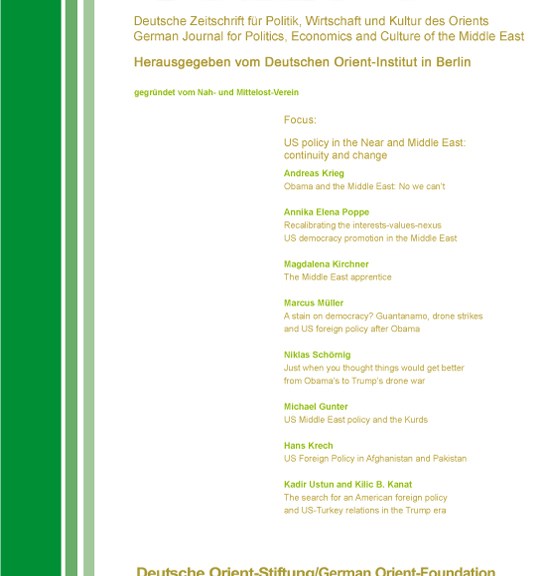
The Search for an American Foreign Policy and US-Turkey Relations in the Trump Era

This article was coauthored by Kadir Ustun and Kilic Kanat and was published by Orient on March 31, 2017.


Orient_II_2017_final_XL

US-Turkey Relations: Arab Spring and the Search for Model Partnership

This article by Kadir Ustun and Kilic Kanat was published as part of SETA DC Perspective series in May 2012.

US-Turkey relations in 2011 were in stark contrast to the “troubled” year of 2010. Policy debates in 2010 focused on the political and diplomatic fallout from the Mavi Marmara incident and Turkey’s “No” vote against the UN Security Council resolution on Iran. Policymakers in Washington called into question Turkey’s foreign policy direction and the intentions of its leadership. Extrication of the Turkish-Israeli relationship from the US-Turkey relationship represented a structural change. As the two sides were seeking ways to adjust to the new reality, the historic transformations sweeping the Middle East in 2011 created a new dynamic in the bilateral relationship. Creation of a special personal rapport between President Obama and Prime Minister Erdoğan was critical for the leadership on both sides to recognize once again that their countries’ relationship needed strengthening. Notwithstanding the differences on a variety of issues, the move toward forging a “model partnership” has begun.

Download the Article (PDF)

The Syrian Quagmire: What’s Holding Turkey Back?

This article by Erol Cebeci and Kadir Ustun was published in Insight Turkey (Vol. 14 / No. 2 / 2012 pp. 13-21) 

The Assad regime has been playing all the diplomatic, political, and security cards it has accumulated over the past several decades. While keeping the violence under a certain threshold on a daily basis so as not to provoke immediate international action, the regime has benefited from the entangled and often conflicted international interests in Syria. The opposition has been unable to deal a serious blow to the regime and international pressure has so far yielded no major results. Though calls for international and regional action have recently intensified, there exists no clear international leadership or consensus on how to handle Syria. The Arab League and Turkey, along with other countries, have created the “Friends of Syria” group after the failure of the UN Security Council resolution on Syria, but Russian and Iranian backing for the Assad regime is seriously limiting options. Given its support for the people against authoritarian regimes during the Arab Spring and its anti- Assad stance, expectations for Turkey to “do something” are increasingly more pronounced. So, what’s holding Turkey back?

Download the Article (PDF)