The Road Ahead After the June 24 Elections

This article was first published by New Turkey on June 26, 2018.

Having handled serious domestic and foreign policy crises over the years, including party closure cases and a failed coup attempt, Erdogan’s campaign for the presidential system has been accepted by the Turkish electorate.
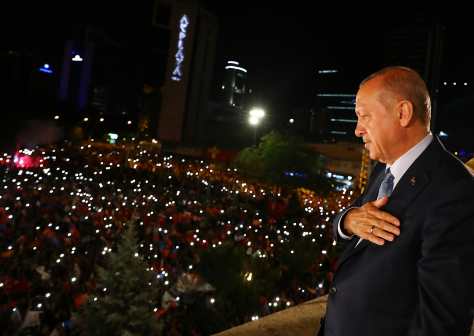
26 haziran 2018.jpg

Sunday’s elections in Turkey have finalized the transition to the presidential system with the victory of President Erdogan and his party. Erdogan has advocated and campaigned for this system change since his years as the Prime Minister, arguing that Turkey needed a political system based on the people’s will not on the will of the civilian and military bureaucratic elites. Having handled serious domestic and foreign policy crises over the years, including party closure cases and a failed coup attempt, Erdogan’s campaign for the presidential system has been accepted by the Turkish electorate. Sunday’s elections results are a proof of this reality.

The AK Party has passed legislation in the past year to prepare and adjust to the new system but there will be more work to be done in order to restructure the executive branch. The AK Party’s seats in parliament is short of a parliamentary majority, which means that it will need to recruit the support of other parties, starting with the MHP, to implement the party program and election promises. The MHP has worked with the AK Party and entered into an alliance in the elections, which provides a ground for further cooperation. As I wrote before the elections, the parliamentary distribution will not hamper the creation of the cabinet and functioning of the executive branch.

As the presidential system requires the restructuring of the political system and fine-tuning of the relationship between the executive and the legislative branches, many details have yet to be worked out. But, President Erdogan has created the necessary groundwork to implement his agenda effectively by striking an alliance with the MHP, which has achieved better than expected results in the election. For major legislative action as well as budget negotiations, Erdogan will likely seek support from the MHP. The MHP will continue to be a key role in the legislative process as it has in the past.

One of the most serious consequences of the elections might be the leadership question in the CHP. The CHP’s presidential candidate Ince has openly challenged the current party leader Kilicdaroglu in the past for electoral failures. Sunday’s results show a large gap between Ince’s votes (%30.64) and the CHP’s electoral showing (%22.64). Ince’s relative success and the party’s perceived failure can pave the road for Ince to challenge Kilicdaroglu once again. However, if there is an understanding between the two leaders that the party voters would vote strategically to ensure that the HDP passed the electoral threshold, such a inter-party rift may not be imminent. However, the 8% discrepancy will most likely force yet another debate around the CHP’s leadership.

While the adjustments to the new system are implemented, the March 2019 local elections will be just around the corner. Political parties will enter the new year in campaign mode and the local elections results can serve as an indicator of party performances. Local elections in Turkey always have a different dynamic than general elections, as they can depend much more on local politics. The March elections will not be different but it will have less impact on the executive branch. It will serve more as an indicator of satisfaction with party performances in parliament. Political parties will focus on agenda items that will help them in local elections. This could mean that parties would have more incentive to strike a compromise with President Erdogan to show the electorate that they are in the business of delivering their election promises instead of obstructing.

The June 24 elections are historic not only for sealing the deal on the adoption of the presidential system but also providing political stability for the next five years. There will always be crises and spoilers that will test the new system. However, in this last election, the Turkish public has spoken definitively.

The June 24 Elections: Turkey’s Search for Stability

This article was first published by New Turkey on June 19, 2018.

The liberal international order has been challenged by the rise of China, the resurgence of Russia in the Middle East and in Europe, and the Brexit, a product of the populist movements throughout the West, including the U.S. Turkey has had to face security, foreign policy, and economic challenges in its immediate neighborhood as well as those emanating from the unpredictability of the international system.

The June 24 Elections Turkey s Search for Stability

Turkey is going to the polls this weekend to decide the presidential and parliamentary elections on the same day – a first in the country’s history. The elections will complete the transition into the presidential system that was decided by last year’s referendum in April 2017. Over the course of the past year, some aspects of the referendum have already been implemented and adaptation legislation has passed. The stakes are high as the president and the parliament will be decided by the Turkish public for the next five years and the presidential system will be fully implemented during that time. 

The very rationale for the change in the system was to never go back to the weak and unstable coalition governments the parliamentary systems tend to produce. The 1990s produced many weak coalition governments often under the shadow of the tutelary system maintained by the military and civilian bureaucracy. The AK Party governments brought stability in the 2000s but were continuously challenged by these forces. The 2007 presidential elections and the 2008 closure case against the AK Party are examples of this.

The AK Party’s electoral victories ensured the primacy of the elected governments against the appointed but the system continued to be a holdover from a foregone era. Once the various initiatives for a comprehensive constitutional change failed because of political reasons, the partial amendments to the constitution were made. The latest yet the most critical one of these amendments is the transition to the presidential system, approved in last year’s referendum.  

In addition to the domestic drivers of the change to the presidential system, Turkey’s foreign policy challenges and its immediate neighborhood contributed to the country’s search for more stability. The Arab Spring produced the most challenging humanitarian catastrophe in Syria, resulting in more than 3,5 million refugees for Turkey. Turkey’s border security was challenged in addition to the increased threats posed by Daesh and the PKK as a result of the Syrian Civil War. Instability in Iraq and the confrontation between the U.S. and Iran over the nuclear issue are only some of the examples of an increasingly unstable environment.

The liberal international order has been challenged by the rise of China, the resurgence of Russia in the Middle East and in Europe, and the Brexit, a product of the populist movements throughout the West, including the U.S. Turkey has had to face security, foreign policy, and economic challenges in its immediate neighborhood as well as those emanating from the unpredictability of the international system. Moreover, in an era when the U.S. has refused or been unable to provide leadership, the Western alliance has found itself increasingly fractured, unable to forge comprehensive policy solutions to a variety of challenges.

Committing to and aligning itself with an international bloc to resolve its international and domestic challenges were no longer an option for Turkey. Diversifying its relationships and compartmentalizing issues with various powers became a necessary practice to navigate an uncertain international environment. At home, the political system continued to be rife with challenges emanating from the lack of a truly civilian constitution and a system that is based on the will of the people. The need for a civilian constitution and a truly democratic system devoid of the institutional tutelage has been the central political debate of the past several decades. The official transition to the presidential system this weekend signifies a critical turning point in that effort.

Any system change would need time to be implemented and to mature over time through challenges and political crises and Turkey is no exception. It is easy to get caught up about who is going to win and what the parliamentary seat distribution is going to look like. However, it needs to be remembered that the June 24 elections are part of Turkey’s quest for domestic stability in an increasingly uncertain international environment. 

Can the Manbij Roadmap Rebuild Mutual Trust Between the US and Turkey?

This article was first published by New Turkey on June 5, 2018.

By partnering with the YPG on the ground, the U.S. lends credibility and legitimacy to YPG forces that goes beyond narrow assistance. It also empowers the YPG against other local groups, including those that are not aligned with the PKK. In the end, giving up armed struggle against Turkey becomes less attractive and unnecessary for the PKK and its allied groups.

Can the Manbij Roadmap Rebuild Mutual Trust Between the US

The Syrian Civil War and its consequences have posed the most difficult strategic challenges to the U.S.-Turkey relationship in recent years. Issues such as the status of the Assad regime, the composition of the opposition, and the U.S. relationship with the YPG have strained bilateral relations. Most of the differences were manageable, as they had an indirect bearing on the security of the U.S. and Turkey. However, the YPG challenge has been of a different nature given that it is the PKK’s Syrian branch and the PKK continues to pose a threat to Turkey’s security.

Over the past couple of months, the two NATO allies finalized an agreement to take concrete steps toward addressing this challenge. While the “roadmap” agreement promises to deliver a serious reassurance to Turkey’s security requirements, its implementation will be key in determining whether it can succeed and lead to future cooperation. If successful, the plan could go a long way toward helping to rebuild the long-damaged mutual trust between the U.S. and Turkey.

The Manbij roadmap announced on Monday foresees the departure of the YPG forces from Manbij and the administering of the city by its local population over the next few months. The U.S. and Turkish security forces are supposed to cooperate on the ground to bring about a sustainable local governance model that is not dominated by the YPG. Both the Euphrates Shield and Afrin military operations have provided Turkey with a lot of experience in building functioning governance structures that are reflective of the ethnic realities of the various localities.

Turkey has long opposed what it calls “demographic engineering” and will continue to do so in the future. This will result in the governance of Manbij by local Arabs who were previously pushed out by the YPG. Once, and if, successful, Turkey will most likely push to implement this model east of the Euphrates as well, in order to reduce the dominance of PKK-aligned groups. This is critical not only for Turkey’s own security, but also for a durable and sustainable stabilization operation on the ground in Syria.     

If the best case scenario is realized as described above, Turkey’s immediate security concerns can be addressed and mutual trust can be rebuilt. It would certainly not solve all the challenges in the U.S.-Turkey relationship, but it would potentially remove one of the most pressing strategic disagreements between the two countries. However, U.S. support for the YPG would continue to be a sore point. U.S. officials and analysts underline the “limited” and “temporary” nature of this support, but for Turkey it certainly means much more. By partnering with the YPG on the ground, the U.S. lends credibility and legitimacy to YPG forces that goes beyond narrow assistance. It also empowers the YPG against other local groups, including those that are not aligned with the PKK. In the end, giving up armed struggle against Turkey becomes less attractive and unnecessary for the PKK and its allied groups.

This dynamic would continue to strain the bilateral relationship, although Turkey’s Afrin operation that put an end to the YPG march toward the Mediterranean and the prospect that the YPG may no longer be in Manbij will help address some of Turkey’s immediate security concerns. The current U.S. willingness to work with Turkey is a good sign. Nevertheless, it will need to be coupled with concrete action on the ground.

If Manbij can serve as an example of a successful stabilization effort and a sustainable and representative governance structure, the U.S.-Turkey strategic conversation would improve and could be broadened to include areas east of the Euphrates river. This kind of cooperation has been lacking between the two countries and is critically important if robust stability is to be achieved. The U.S. will need state allies like Turkey, especially if it intends to pull out of Syria, or at least further reduce its footprint. Investing in a sub-state actor will not help bring stability to northern Syria in the long run. In that sense, a successful implementation of the newly announced Manbij roadmap can help start a meaningful strategic dialogue between the two allies.

The New Iran Strategy: Bringing the Regime to its Knees through Sanctions and Isolation

This article was first published by New Turkey on May 29, 2018.

The Trump administration’s new Iran strategy promises to bring the regime to its knees through sanctions and isolation but lacks a broad international coalition determined to achieve it. 

The New Iran Strategy Bringing the Regime to its Knees

President Trump delivered a major campaign promise by pulling out of the Joint Comprehensive Plan of Action (JCPOA) and left everyone wondering what the new Iran policy would be. Last week, Secretary of State Mike Pompeo attempted to answer that question with a major policy speech at the Heritage Foundation. Pompeo criticized the JCPOA for its “fatal flaws,” including the sunset provisions, weak inspection and verification mechanisms, failure to address Iran’s ballistic and cruise missiles, and inadvertently providing finance for Iran’s destabilizing activities in the Middle East.

The new Iran strategy, he announced, would impose “unprecedented financial pressure,” deter “Iranian aggression” in the region, and advocate for the Iranian people by standing with them against the regime. The administration, he declared, would be open to a completely new deal that would definitively guarantee Iran not to have nuclear weapons and gives up on its “malign” activities in the Middle East.

The newly announced policy, which at times came quite close to calling for a regime change in Tehran, essentially promises a return to a policy of pressure and isolation of Iran. The kind of sweeping change in behavior it asks of Tehran is almost impossible for it would essentially require the regime to drop its main claims to legitimacy in the region. This is why those who argue that Pompeo’s speech essentially calls for a regime change have a point.

Regardless, we are entering a period of heightened tensions in the region especially if the U.S. does not contend itself with sanctions alone but undertakes a serious effort to push back against Iranian proxies throughout the region. In all likelihood, Iran would try to play the long game by resisting the financial pressures while trying to create frictions between the U.S. and its European and regional allies.

The new Iran strategy seeks to mount an unprecedented pressure campaign to bring the regime to its knees. It does point to a way out but it sounds a lot like the U.S. is seeking the regime’s total surrender or economic collapse. The U.S. will need both its European and regional allies to implement the kind of overwhelming pressure it promises. The Europeans will be a lot less willing than the last time in coordinating a new round of sanctions. Regional allies the U.S. is counting on will be either ineffective or unwilling to confront Iran and its proxies in the region.

Furthermore, it is highly doubtful whether the U.S. can bring Russia and China on board, as their cooperation in the JCPOA was crucially important. The administration’s unilateral declaration of a new Iran policy carries all the risks and deficiencies associated with acting alone and without a strategy to bring about an international coalition supporting it. Non-European powers will be less than willing to isolate Iran or requiring a high price tag to cooperate with the U.S., which will be hard pressed to convince others that it will stick to its word this time round.

If the Trump administration does not succeed in forging a broad coalition willing to isolate Iran, a handful of European allies and Israel, Saudi Arabia, the United Arab Emirates, and Egypt in the region, as part of an anti-Iran front, will only support its new Iran strategy. Each of these allies will have a different priority vis-a-vis Iran, which will be difficult to reconcile and produce an effective policy.

Part of the problem with Obama’s Iran policy was that it lacked a buy in from “traditional” regional allies and failed to assuage their concerns. Now, the Trump administration seems to side with them in a big way, but without a comprehensive policy that addresses their concerns and brings Iran to the negotiating table. The Trump administration’s new Iran strategy promises to bring the regime to its knees through sanctions and isolation but lacks a broad international coalition determined to achieve it. 

The US Pretends No More in Giving Israel What it Wants

This article was first published by New Turkey on May 21, 2018.

The Middle East as a whole has to live with a reality where the U.S. not only fails to provide leadership but reduces its role to supporting the Israeli cause with a few regional backers. A U.S. policy designed to appease the American evangelicals and the Netanyahu government can only spell further disaster.

The US Pretends No More in Giving Israel What it

There were two images broadcast to the world last week that illustrated the end of the U.S. role in the Middle East peace process as we know it. The contrast between celebratory images of the opening of the U.S. embassy in Jerusalem and the disturbing images of violence from Gaza was deeply unsettling. They were not only a reminder of the failed U.S. policy, but more importantly, an illustration of what might be in store for the region as a result of the Trump administration’s “disruptive” policies. If the Jerusalem decision is any indication, the administration’s next moves in the Israeli-Palestinian conflict will be to embrace and fully endorse the Israeli demands without any regard to the Palestinian aspirations, which can only bring about more violence and instability.

The administration has touted its unilateral Jerusalem move as honoring a long-held American promise and a recognition of the reality on the ground. That reality, however, is one that has been created by Israel under the watch of successive U.S. administrations. Israel has rarely, if ever, negotiated in good faith, always blaming the Palestinians for the failure of the by now defunct “peace process.” U.S. efforts to stop or even slow down the settlement activity proved futile in the past and the Trump administration is not even interested in trying. The U.S.’ Jerusalem recognition fits the pattern of Israel getting its way by deepening its occupation without giving up anything that would serve peace.

The U.S., as the only power that could exact a serious cost on the Israeli intransigence, is now choosing to sign on to a common cause with the Netanyahu government, which intends to destroy any Palestinian political aspirations. Holding Hamas responsible for Gaza’s plight while ignoring the Israeli attacks on Palestinian demonstrators along the Gaza border last week is a convenient tool of denying any legitimacy to Palestinian demands. The Trump administration as well as the U.S. Congress seem to have signed on to this approach. This is clearly siding with the Israeli agenda rather than recognizing the reality of the ever-deepening occupation.

President Trump delivered two major victories – withdrawal from the Iran nuclear deal and the Jerusalem move – to the Israeli Prime Minister Netanyahu within a matter of weeks without any Israeli concessions toward peace. With the Jerusalem move, he is delivering a major promise to its Evangelical supporters as well. Divisions and the muted response by the Arab world is all too clear and no regional power besides Turkey seems interested in supporting Palestinian aspirations in any serious way. Many commentators have pointed out the lack of strong reaction against the Jerusalem move and they may be right to a certain extent. However, the abandoning of the U.S. role in the peace process once and for all only confirms those who have argued all along that the U.S. is only interested in advancing and protecting Israel’s agenda.

The silver lining in the Jerusalem decision could have been that the U.S. no longer pretends to be an honest broker of peace. However, the administration continues to claim that the Jerusalem decision will actually serve peace and they have a plan to achieve it. The administration’s mysterious “peace plan” will likely be a unilateral one, receiving the support only of some of the Gulf nations and Israel. The Palestinian cause matters in the Middle East and it will not be resolved with the acquiescence of a few Arab nations to a unilateral declaration by the Trump administration.

The Jerusalem move reminds us that the U.S. role in the region under Trump promises to exacerbate existing fault lines and worsen conflicts. Trump has actually acknowledged the bankruptcy of the U.S. policy on the Israeli-Palestinian conflict but in such a way as to heighten tensions without a viable peace plan. The region as a whole has to live with a reality where the U.S. not only fails to provide leadership but reduces its role to supporting the Israeli cause with a few regional backers. A U.S. policy designed to appease the American evangelicals and the Netanyahu government can only spell further disaster.

Pulling Out of the Nuclear Deal: Towards a New Status Quo with Iran?

This article was first published by New Turkey on May 8, 2018.

Reversing the deal may well result in catastrophe but it will more likely lead to a tit-for-tat in the region where the administration will be able to claim that it is rolling back Iran. That may prove to be the new status quo.

Pulling Out of the Nuclear Deal Towards a New Status

President Trump is widely expected to walk away from the Iran nuclear deal by refusing to issue a sanctions waiver this week. One of Trump’s central attacks on the Obama administration has been the Joint Comprehensive Plan of Action (JCPOA) itself on grounds that it gave Iran billions of dollars that failed to prevent Iran from going down the nuclear path. Undoing the most important foreign policy piece of the Obama legacy is obviously irresistible for President Trump, who has had to begrudgingly certify that Iran was in compliance with the agreement. The President’s strong critique of the nuclear deal is now coupled with the Israeli Prime Minister Netanyahu’s “intelligence coup” last week that seems to give Trump further political cover, though it is doubtful he really needed it. Should the President pull the U.S. out of the nuclear deal, it is unclear what will replace it, and perhaps more importantly, what U.S. policy towards Iran will be.

Candidate Obama had made the headlines when he suggested he would talk to Iran without preconditions in the 2008 presidential campaign. He sought a nuclear agreement with Iran that would ultimately lead to a historic rapprochement with the U.S. Obama suggested that Iran had a rightful place in the region and would need to “share” the region with Saudi Arabia among others, signaling the regional accommodation of Iran.

Although the Obama administration constantly argued that they were focused only on the nuclear deal, it was clear to everyone that it would have broader strategic and political implications. Nevertheless, Obama insisted on the narrow focus of the nuclear deal in an effort to avoid confronting Iran in the region, which could ultimately jeopardize the deal. The regional accommodation in return for the nuke deal policy has been partly responsible for the expansion of Iran’s strategic influence in the region. At the same time, the deal arguably prevented a potential military operation against Iran’s nuclear facilities, which could have led to a regional confrontation.

President Trump has repeatedly attacked the Iran deal as an “insane” one and suggested its renegotiation but the outlines of a new approach are missing. The Obama administration had spent months to bring Europeans, Russia and China on board for imposing sanctions on Iran but the Trump administration has so far contended itself with strong rhetorical attacks on the deal without providing a roadmap or explaining its goals. Trump has indicated he might be open to a “better deal” under pressure from European allies but there is no serious diplomatic effort to build a front against Iran. Undermining the deal seems to be the sole focus at the moment. Ripping up the nuclear deal may not lead to an immediate military confrontation given President Trump’s non-interventionist streak despite his harsh rhetoric and threats.

The U.S. pullout of the nuclear deal will certainly introduce tensions into a region that is already a sea of uncertainty and unpredictability. Trump’s domestic agenda’s nationalist and isolationist tendency would probably preclude a regime change policy toward Iran. Trump is unlikely to seek regime change and will be unwilling to push back against the Iran militarily to avoid yet another costly war in the region. The president may contend himself with undoing the nuclear deal without replacing it with another deal or another comprehensive Iran policy.

A new Iran policy would need to have a theory of the case addressing Iran’s regional role and its relations with the U.S. Obama’s Iran policy saw a legitimate role for Iran in the region and used the nuke deal for a future normalization of ties. It is not clear if Trump has such a theory of the case and whether he wants to devise a new Iran policy beyond undoing the nuclear deal. Reversing the deal may well result in catastrophe but it will more likely lead to a tit-for-tat in the region where the administration will be able to claim that it is rolling back Iran. That may prove to be the new status quo.