Category Archives: Foreign Policy

Walking Through the Minefields in the US-Turkey Relationship

This article was first published by New Turkey on November 21, 2018.

The U.S.-Turkey relationship is going through interesting times, as both allies are willing to work through their differences despite serious disagreements over a host of issues.
21 aralik kadir ustun post.jpg

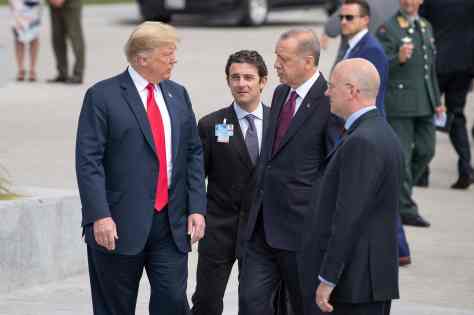
The U.S.-Turkey relationship is going through interesting times, as both allies are willing to work through their differences despite serious disagreements over a host of issues. Turkey has been pressing the U.S. as well as the international community to take a firmer stand against those responsible for the murder of Jamal Khashoggi inside the Saudi consulate in Istanbul.

 The Turkish position puts President Trump in an awkward position, as he appears inclined to accept that the Crown Prince Mohammad bin Selman was not responsible. Trump also pledged that the relationship with Saudi Arabia would not be affected by the Khashoggi affair. Despite this disagreement, President Trump made some positive statements about President Erdogan and Turkey, citing the release of Pastor Andrew Brunson last month. Most recently, when asked about the extradition of Gulen to Turkey, Trump denied getting involved in the legal process but stated that the U.S. is looking for “whatever we can do for Turkey.”

There is also the U.S. support for the YPG that continues to be a sticking point. However, both the American and Turkish leaderships express willingness to work through these differences largely because the two NATO allies have a lot more to gain by working together than at cross purposes.

For some analysts, the Khashoggi case has been a useful tool for Turkey to play politics in a geostrategic power struggle. It is important to note that the Saudi failure to provide an explanation for what happened to Khashoggi lasted weeks. Every explanation the Saudis provided was quickly falsified by facts and Turkey insisted on accountability as well as national sovereignty. For all intents and purposes, the Saudi behavior forced Turkey to leak facts and made it all too easy to pursue a “drip drip strategy,” if there was ever such a conscious strategy in the first place.

The U.S. media’s pressure on the Trump administration to take a clear stance was indirectly owed to Turkey’s unwillingness to let this murder be covered up. Turkey made a careful distinction between King Salman and the rest of the Saudi leadership, creating at least some wiggle room without abandoning full accountability for Khashoggi’s murder. President Trump may have preferred that the issue goes away somehow but his administration continued to engage Turkey on the matter. This dynamic of persistent engagement despite deep differences is interesting and might provide a blueprint at least for the next two years.

Both on the issue of Gulen’s extradition and the U.S. support for the YPG, there seems to be a similar dynamic at play. Turkey has requested Gulen’s extradition and pushed hard for it politically but understands the political constraints on the Trump administration. This does not mean Turkey will contend itself with the status quo and give up on the extradition request. Turkey will continue to bring up the issue and pressure the U.S. side to act against the Gulen network all the while engaging instead of confronting the administration. With regard to the YPG issue, Turkey again insists that the U.S. should stop supporting the organization because of its links to the PKK. Yet, it continues to engage the new U.S. team on the Syria policy without accepting any kind of normalization of the YPG.

All the minefields in the U.S.-Turkey relationship need careful analysis and comprehensive policy coordination and there is a long way to go before that happens. Nevertheless, it is important to underline that the two sides are both willing to listen to each other’s positions and engage in a meaningful way. It is not clear if this dynamic will be sustainable in the medium and long terms but it should be considered a start in any case.

Time will tell if this is all we can hope for but continuous engagement through crises may be the solution for the time being. However, we should not lose sight that a comprehensive strategic dialogue would produce more concrete and sustainable results in the long run.
Trump and the New House (of Cards)

This article was first published by The New Turkey on November 14, 2018.

The midterms created a split in Congress, which promises major political showdowns between the President and House Democrats. As further infighting appears to be on the horizon, Trump may turn to foreign policy to project an image of strength despite his domestically inclined America first agenda.

GettyImages-1060229528-1024x683.jpg

The last season of the much-acclaimed House of Cards features the story of the first woman American president Claire Underwood (Hale). The storyline is quite a bit of a commentary on the current debates in U.S. politics, women’s participation in politics, relations with Russia, impeachment of a president or even a Supreme Court judge among others. In the first two years of Trump’s presidency, many controversies have dominated the political debate but the president has not been seriously threatened despite much political ruckus. With Democrats in the House majority now, more political turmoil awaits the U.S. public as a number of investigations may be conducted in the coming months. Not to mention the Mueller probe that may have fatal consequences for President Trump. The midterms created a split in Congress, which promises major political showdowns between the President and House Democrats. As further infighting appears to be on the horizon, Trump may turn to foreign policy to project an image of strength despite his domestically inclined America first agenda.

Democrats will have to play their “cards” carefully as they will not want to be seen as “obstructionists” who are only interested in going after President Trump personally instead of serving the interests of the American people. The Democratic Party leadership has signaled that they want irrefutable evidence out of the Mueller probe and broad Republican support before considering impeachment. No matter what comes out of the Mueller probe, however, it will come down to a political decision and a judgment call by Democrats. Given the high likelihood that President Trump will continue to enjoy strong support by Republicans, Democrats dead set on impeachment will probably be disappointed. However, this does not mean that the administration will not face serious pressure from Congress in all fronts, both in terms of congressional investigations and public policy.

Trump’s removal of the Attorney General Jeff Sessions and his replacement of Matthew Whitaker instead of Rod Rosenstein is instructive as the president wants the Mueller investigation to be neutralized, denying ammunition to the House Democrats. Democrats have been threatening to investigate Sessions’ replacement with Whitaker but it is not clear if they can prevent him from overseeing the Mueller probe in a way aligned with his public statements against the investigation. Clearly, this investigation has the potential to determine the relationship between the president and the House Democrats in the next two years. In all likelihood, the drawn-out process will make legislation extremely difficult, if not impossible. In that case, Trump may simply turn to foreign policy to win points in the eyes of the American public heading to the 2020 presidential election.

One obvious place will be the Middle East, particularly Iran. The administration already pulled out of the JCPOA and snapped back sanctions, issuing 6-month waivers to 8 countries including Turkey. Squeezing Iran and bringing them to the table on the administration’s terms seems to be the ultimate goal here, as is clear from the Secretary of State Pompeo’s article in Foreign Affairs. Iran will likely wait to see the results of the 2020 elections before committing to negotiations despite the harsh sanctions. In that case, Trump may try to exert more pressure on Iran with additional sanctions, perhaps refusing to extend further waivers to countries trading with Iran. Pushing against pro-Iranian forces in Syria, Iraq, and Yemen is another strategy the administration could pursue but so far Trump has not devised a comprehensive regional strategy against Iran. House Democrats have promised to investigate Trump’s relationship with the Saudis as well, which may limit his ability to increase pressure against Iran in the Persian Gulf.

Another foreign policy issue candidate to display strength and whip up domestic support would be North Korea. However, President Trump’s rhetoric on this one reached such heights in the past that a repeat of it would come dangerously close to war. Both Iran and North Korea issues carry the risk of escalation and miscalculations but Trump’s deeply anti-war agenda was part of how he won the presidency in the first place. If he comes too close to or engages in yet another war, he will lose domestic support even from his constituency. So far, President Trump has been able to shape or at least change the public debate whenever he wanted to a large extent. As he might seek to bolster his image abroad, the alliances and institutions he has attacked so far may not be there to help him. In that case, the unilateral action may be his only choice. The U.S. presidents have leaned on foreign policy issues when they felt trapped at home but that can have costly consequences at home as well.

President Trump has enjoyed Republican support in both houses of Congress until now, succeeding in cutting taxes, deregulation and Supreme Court appointments among others. In the next two years, he will be faced with a House intent on preventing his agenda and investigating his administration. As major legislation will be close to impossible to pass through Congress, he may choose to play his foreign policy card in the lead up to 2020. It is not clear if it will be enough, however, and he will have to play his hand just as well as the House Democrats.

Turkey-US Relations Post-Brunson

This article was first published by The New Turkey on October 16, 2018.

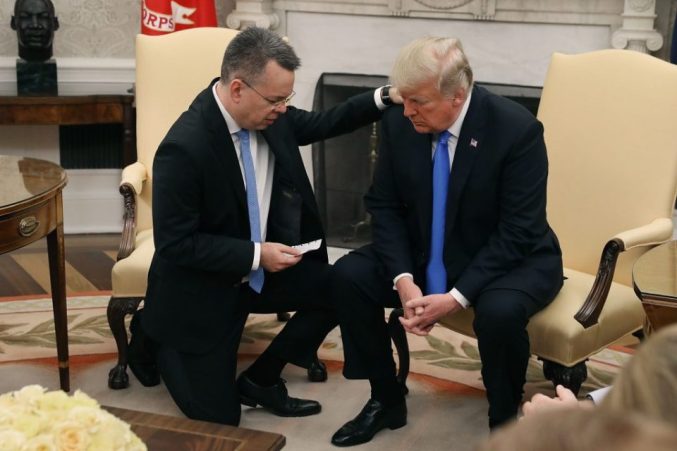
Brunson’s return to the U.S. and President Trump’s hosting of the pastor in the oval office with high level administration officials sends a strong message to the Evangelical base ahead of the midterm elections in November. Not that Trump risked losing the support of the Evangelicals, but Brunson’s return gives his standing with Evangelical supporters a big boost.

brunson sonrasi opinion.jpg

In the first year of President Trump’s tenure, Turkish-American relations went through what we can call a period of “sizing up,” as hopes for a new beginning were somewhat moderated by strategic challenges. The Trump administration had inherited the Obama policy of supporting “local forces” (read YPG) against Daesh with no U.S. boots on the ground save for the “military advisors.” Turkey was patient in Trump’s first year to allow the administration some time to re-evaluate the mission and start working with Turkey instead of the PKK’s Syrian branch. When it became clear that the Trump administration would settle on the same policy, Turkey launched a military operation in Afrin to ensure the YPG forces would not go west of the Euphrates river.

The serious divergence on the ground in northern Syria has continued, but efforts to put the U.S.-Turkey relationship back on track also continued, as outstanding legal cases (Brunson and Zarrab cases) were compartmentalized away from broader policy questions. However, the pressure from the Evangelical base of the Trump administration led to an ill-timed ultimatum by President Trump and Vice President Pence, resulting in yet another bilateral crisis.

As a result of the pressure, the U.S. imposed sanctions against Turkish ministers and additional steel and aluminum tariffs, a first against a NATO ally. These measures appeared to be largely symbolic, but they had a serious impact on the Turkish Lira’s devaluation against the U.S. dollar. As Turkey refused to bow down to such economic pressures, the relationship came to the brink of total breakdown. Clearly, the Brunson case was a major catalyzer in this process, but the underlying strategic disagreements and the already existing mutual distrust has created a fertile ground for a major crisis.

With the Turkish courts deciding to release Pastor Brunson last week, however, an important new phase might just be starting in the bilateral relationship. Brunson’s return to the U.S. and President Trump’s hosting of the pastor in the oval office with high level administration officials sends a strong message to the Evangelical base ahead of the midterm elections in November.

Not that Trump risked losing the support of the Evangelicals, but Brunson’s return gives his standing with Evangelical supporters a big boost. Turkish leadership has maintained the legal process played itself out and both sides insisted there was no specific deal. We should note that there does not need to be a deal for this development to have a positive impact on the U.S.-Turkey relationship.

The fact that a legal case derailed the relationship between two NATO allies should give everyone a pause. It underscores the complexity of the strategic environment in Turkey’s immediate neighborhood and heightened security concerns Turkey feels as a result of U.S. policies in the region. President Trump’s positive remarks about Turkey reflect his concern over his standing with the Evangelical voters, but this will not be enough for a broader strategic conversation between the U.S. and Turkey.

The recent changes in the U.S. Syria policy have given at least a limited amount of reassurances to Turkey that its interests would be taken into consideration more carefully. The U.S. rhetorical support for Turkey against an imminent military operation against Idlib was a welcome development in this sense. Yet, without a more comprehensive policy coordination between two sides, the mutual skepticism will continue, especially as the U.S. continues to support the YPG.

The upside for the relationship is that the “sizing up” period may be over and both sides are much clearer about their positions. The ambiguities regarding northern Syria as well as the uncertain fate of the Brunson case are no longer excuses for the lack of an honest dialogue. The regional crises will almost certainly create new challenges and the U.S.-Turkey ties will be tried. The lesson from the Brunson case is that Turkey will not bow to threats and pressures, and that the U.S. will need to pursue diplomatic options instead. Going forward, a talk-first-shoot-later approach will have to win for a healthier U.S.-Turkey relationship.

What are the Implications of America’s New Syria Policy for Turkey?

This article was first published by The New Turkey on October 10, 2018.

The U.S. policymakers in charge of the Syria policy would like to see Turkey enlisted on their side in their push back against Iran in the region and they must see an interest in alleviating at least some of the Turkish concerns.

10 ekim kadir hoca opinion.jpg

The disagreement over the control and status of the Syrian town of Manbij has been a symbol of the strategic differences between the U.S. and Turkey’s Syria policies for a while now. Turkey’s successful military operation in Afrin led to the announcement of a roadmap over Manbij, which relatively calmed down U.S.-Turkey tensions. However, the U.S. continued to support the PKK-affiliated YPG forces in a stated mission to deny a return to Daesh in northern Syria.

With Daesh no longer holding territory, this mission did not appear to provide convincing rationale for a prolonged American presence on the ground. More recently, the U.S. ended its ambiguity by announcing an open-ended presence in Syria declaring a mission to limit Iranian influence in Syria as part of a broader strategy to confront Iran in the region.

With this critical shift in strategy, the U.S. commitment to northern Syria seems to be set in motion for the long term. One of the first concrete outcomes of this change appears to be the administration’s stern warnings against a regime operation against Idlib, which would have caused yet another humanitarian catastrophe.

Turkey sent reinforcements to its observation posts in and around Idlib to prevent the regime from an easy takeover while lobbying Russia to prevent such an operation. The U.S. rhetoric against the looming operation may have helped Turkey’s case, convincing Russia to hold off at least for a period of time in return for the Turkish promise to push terror groups out of Idlib.

Another consequence of the U.S. policy change seems to be the announcement that the PYD would no longer negotiate with the Assad regime. This step seems to be aimed at softening the Turkish argument that the U.S. should not trust the PYD, which would work with the Assad regime, Iran or Russia depending on its needs. This argument still holds true despite the PYD’s obvious tactic to appease its American supporters, who are clearly concerned about the degree to which the regime is supported by Iranians.

The PYD has played a critical role in the PKK’s regional ambitions by opening the door for legitimacy in the international arena despite Turkey’s warnings. Turkey has been able to limit the PYD’s forays into the western side of the Euphrates but the area it continues to control remains a major concern for Turkey.

The U.S. policymakers in charge of the Syria policy would like to see Turkey enlisted on their side in their push back against Iran in the region and they must see an interest in alleviating at least some of the Turkish concerns. This kind of willingness to work with Turkey and the most recent announcement of joint Turkish-American patrols around Manbij can help rebuild confidence between the two NATO allies.

Nevertheless, we should be clear-eyed about the reality on the ground of the U.S. support for the PYD, which is considered by Turkey as a direct security threat. This will continue to be the Achilles’ heel in the U.S.-Turkey bilateral relationship. The PKK understands this and will seek to exploit it for its interests.

Turkey feels more confident after its Afrin operation, the Manbij agreement with the U.S., and the successful diplomatic effort to prevent the Assad regime from launching a major military assault against Idlib, supported at least rhetorically by Washington. These are strong signs for a renewed dynamic that takes into consideration Turkey’s interests and concerns. But once again, American support for the YPG continues to be the underlying fundamental strategic divergence between the two allies, with significant potential to undermine any positive momentum.

Towards a New International System Without US Leadership

This article was first published by The New Turkey on October 2, 2018.

In the years ahead, if it decides to return, U.S. global leadership will find itself in an environment that has fundamentally changed. The emergence of regional cooperation mechanisms and mini-alliances based on a variety of issues will create realities that will not be easy to replace.

Towards a New International System Without US Leadership

There has been a lot of debate about the current U.S. unwillingness to lead the liberal international order it created after World War II. The Obama administration already displayed signs of war weariness, which often translated into no action in conflicts like Syria. On issues that he cared about the most, the Iran nuclear issue and climate change, President Obama worked hard to build international consensus through multilateral institutions in the international system. However, the U.S. was already hesitant to provide leadership on a whole host of issues, particularly in matters of war and peace.

Having run on the theme of “America First,” the Trump administration has transformed this hesitation to what many would call hostility against internationalism and the global institutions themselves. From NATO to NAFTA, military and economic multilateral institutions and agreements have been targeted by President Trump. Traditional allies have been threatened with tariffs and economic pressure unless they agree to deals that would no longer “take advantage” of the U.S. It would be misleading to label this attitude isolationism per se. The Trump administration has been insisting that these international institutions and agreements be made to serve U.S. interests even if it is at the expense of international liberal order.

Just as we saw in the case of the Obama administration’s reluctance to lead, we are now witnessing the Trump administration’s resentment against the international system and that the U.S. is reconsidering its global role. Clearly, both administrations provided no comprehensive answers to the leadership question and both of their approaches have been subject to heavy contestation from both the left and the right domestically. Furthermore, more often than not, the Trump administration’s admonishment of the international system has subsided with rather superficial adjustments (NATO members’ promise to increase their national defense budget to 2%) or renegotiated trade deals (U.S.-Mexico-Canada Trade Agreement instead of NAFTA). The lesson here is that neither the Obama nor Trump administration has addressed the global leadership question in a comprehensive manner.

The message to the world has been that the U.S. has been rethinking its global role in a rather confused and haphazard manner. At times, the somewhat ideological assertion of national sovereignty seems to take priority whereas, at other times, satisfying some domestic constituency seems to suffice. The response of both the allies (the EU and others) as well as potential rivals (China) have been an interesting one. Nobody seems willing to sit and wait for the U.S. to “come to its senses.”

Allies are thinking of ways to live without the U.S. leadership, recognizing that they may even have to confront the U.S. along the way. The rebuff President Trump received from the UN Security Council a special session on Iran, which was instructive in this sense. Potential competitors like China, on the other hand, are working hard to minimize the economic impact of the impending trade wars by strengthening their regional relationships. In many ways, the world is not waiting for the U.S.

Turkey, as a traditional ally, has had to adjust to the regional realities with minimal or no serious U.S. leadership on a variety of issues including the Syrian crisis. In order to protect its national security and economic interests in the region by minimizing the detrimental impact of the Syrian conflict, Turkey has worked with Russia and Iran on the diplomatic and strategic fronts, the EU on the humanitarian front, and the U.S. on the political front.

The days of alignment with a clearly identified bloc of nations are long gone. Creating a strategy based on the realities on the ground and one that accommodates some of the priorities of the regional powers has become a routine part of policymaking. The most recent rapprochement with Germany can be given as an example of an effort to “bring Europe in” in the absence of robust U.S. leadership.

In the years ahead, if it decides to return, U.S. global leadership will find itself in an environment that has fundamentally changed. The emergence of regional cooperation mechanisms and mini-alliances based on a variety of issues will create realities that will not be easy to replace.

Providing a global framework for action will be ever more difficult since many countries, both allies and rivals, will have pivoted away on a whole host of strategic and economic issues. The U.S. will continue to enjoy great capacity to shape world events, alliances and institutions for the foreseeable future but it will find it increasingly challenging to lead given the legacy of these intervening years with minimal serious U.S. role.

Can the Turkish-Russian Deal Save Idlib?

This article was first published by The New Turkey on September 18, 2018

Turkey’s diplomatic success may have just saved thousands of innocent lives as well as yet another unnecessary humanitarian crisis. However, the Assad regime will certainly seek to take over Idlib eventually. If the Turkish-Russian deal succeeds, the opposition can survive and the contours of a future political deal can be based more on realities on the ground rather than the political goals of the Assad regime.

Can the Turkish-Russian Deal Save Idlib

The Turkish-Russian agreement arrived in Sochi in a meeting between President Erdogan and President Putin comes just in time to avert a major humanitarian crisis. The agreement is to create a demilitarized buffer zone between the opposition and the Assad regime from where heavy weapons would be pulled out. The 10 to 12-mile corridor would be free of al-Qaeda related terror groups under the Hayat Tahrir al-Sham (HTS) and the zone would be patrolled by Turkish and Russian forces. It is clear that the implementation will be key in determining the ultimate success of the deal but preventing hundreds of thousands from rushing to the north is already a huge relief for Turkey.

The agreement, which will come into effect by October 10, is a diplomatic win for Turkey as well. Turkey has been lobbying Russia and Iran to prevent the Assad regime from committing more war crimes and creating yet another humanitarian disaster. Through the Astana process, Turkey has worked to deescalate the conflict and to create safe zones. The Assad regime has been using the presence of terror groups like the HTS to justify a major military operation against Idlib, which houses around three million civilians. The Turkish-Russian agreement sends a signal to the regime that it cannot ignore Turkey’s interests and export insecurity to its northern neighbor.

Turkey has adopted a forward leaning military posture since the summer of 2016 to ensure that security threats emanating from Syria no longer threaten the Turkish border towns. Both the Euphrates Shield and Afrin operations accomplished this goal to a large extent by pushing the YPG, Daesh, and regime control away from the border. A large-scale military operation by the regime against Idlib would upset the hard-achieved stability in the areas controlled by Turkey and Turkish-supported opposition groups. It would not only weaken Turkey’s ability to manage the humanitarian challenges on the ground but also threaten Turkish border security.

The most difficult part for Turkey will probably be ensuring that the HTS are removed from the buffer zone areas. The continued HTS presence has given the Assad regime an excuse to make a case for attacking Idlib. While it is extremely difficult and unrealistic for Turkey to eliminate HTS completely, the agreement gives Turkey time to force the group’s hardcore elements, which are in fact in the minority, to separate from the more local Syrian fighters and leave the area. This will be critical in removing the Assad regime’s excuse to attack Idlib.

In strategic terms, Idlib is the last bastion of the moderate opposition supported by Turkey. The agreement would require the opposition to pull its heavy weapons out of the buffer zone, which would remove the chance of an imminent clash with the regime forces supported by Russia and Iran. It is not yet clear whether Iran would abide by this agreement but it was already clear that Iranians did not necessarily alienate Turkey at this point. It would be extremely difficult for the regime to launch an offensive on its own without Iran’s help. If the opposition can feel somewhat secure as a result of this agreement, given that Turkish troops will be patrolling the buffer zone, they may be able to focus on other priorities such as providing security and confronting al-Qaeda related groups.

Turkey’s diplomatic success may have just saved thousands of innocent lives as well as yet another unnecessary humanitarian crisis. However, the Assad regime will certainly seek to take over Idlib eventually. If the Turkish-Russian deal succeeds, the opposition can survive and the contours of a future political deal can be based more on realities on the ground rather than the political goals of the Assad regime.