Category Archives: Foreign Policy

Taking Stock of the Syria Withdrawal Decision

This article was first published by New Turkey on January 23, 2019.

The Syria withdrawal decision is criticized on many fronts but most critics complain more about the style and timing than the substance of it. More importantly, they have failed to propose a realistic policy goal that justifies an indefinite U.S. presence.

The Syria withdrawal decision continues to stir a highly politicized debate among foreign policy professionals, including former and current government officials. Several arguments are made against the President’s decision but none of them provide a strong rationale for an open-ended American military presence in northern Syria. These critics also forget that the continued U.S. military presence in northern Syria and the support for the YPG were becoming increasingly unsustainable in the face of Turkish opposition. The decision actually opened up possibilities for a robust U.S.-Turkey cooperation on the ground to achieve sustainable stability and a truly enduring defeat of Daesh.

One of the most repeated anti-withdrawal arguments, articulated by the former U.S. envoy for the anti-Daesh coalition, is directed against the President’s declaration that Daesh is defeated. Ignoring the fact that Daesh no longer controls territory in northern Syria, proponents of this view argue that Daesh is far from defeated. They cite the most recent terrorist attack in the town of Manbij as a perfect example of what happens if the U.S. leaves. Yet, critics fail to provide a definition of what would constitute a defeat of Daesh and in what time frame they expect to reach that goal. Daesh or its remnants in one form or another may survive and pose a threat but it is in no way comparable to holding territory and declaring a caliphate. Moreover, Turkey has been committed to the lasting defeat of Daesh, exemplified by the thousands of Turkish soldiers on the frontlines.

It should also be remembered that the U.S. “partners” on the ground, the PKK-linked YPG forces, have not shied away from subtle threats in an effort to delay and complicate an American departure for their political purposes. The U.S. policymakers, since the fall of 2014, have ignored the regional political game the YPG/PKK has been trying to play. Their bid to present themselves as the “most effective fighting force” against Daesh was meant to legitimize themselves in the eyes of the U.S. despite Turkish opposition. Turkey has been adamantly against the U.S. investment in the YPG and the opponents of the Syria withdrawal continue to underestimate Turkish determination to curb the political aspirations of the Syrian branch of the PKK. This dynamic presented the U.S. with a clear choice between partnering with a recycled terror group and working with a NATO ally.

Another argument leveled against the withdrawal decision has been that the U.S. would lose credibility vis-a-vis potential future partners. “Abandoning Kurds” has become a phrase thrown around rather easily, without making a distinction between different Kurdish groups. The phrase has curtailed the fact the YPG has been opposed to rights of Kurdish groups not aligned with the PKK. The question of the U.S. one day leaving the region is not a new one and the YPG has sought to hedge against that possibility from day one, as they sought an understanding with the Assad regime as well as with Russia. It is no surprise for them nor for any serious student of local and regional dynamics.

The Syria withdrawal decision is criticized on many fronts but most critics complain more about the style and timing than the substance of it. More importantly, they have failed to propose a realistic policy goal that justifies an indefinite U.S. presence. It is also unconvincing that the U.S. could achieve some of the geopolitical goals, such as countering Iran, with such a small force in northern Syria. The argument for not leaving a vacuum that might be filled by Russia also lacks weight since the U.S. has already allowed Russia to play a much larger role since the Obama administration. The direct consequence of the decision will actually be working with Turkey. In this sense, the most critical aspect of the withdrawal decision might just be that the U.S. is deciding to work with its NATO ally in a serious way to achieve lasting stability in northern Syria.
Another Bumpy Week in US-Turkey Relations

This article was first published by New Turkey on January 15, 2019.

The continued U.S. insistence on the use of the general category “Kurds” to describe the YPG forces in northern Syria is a major irritant for Turkey and a seemingly deliberate effort to legitimize the PKK.

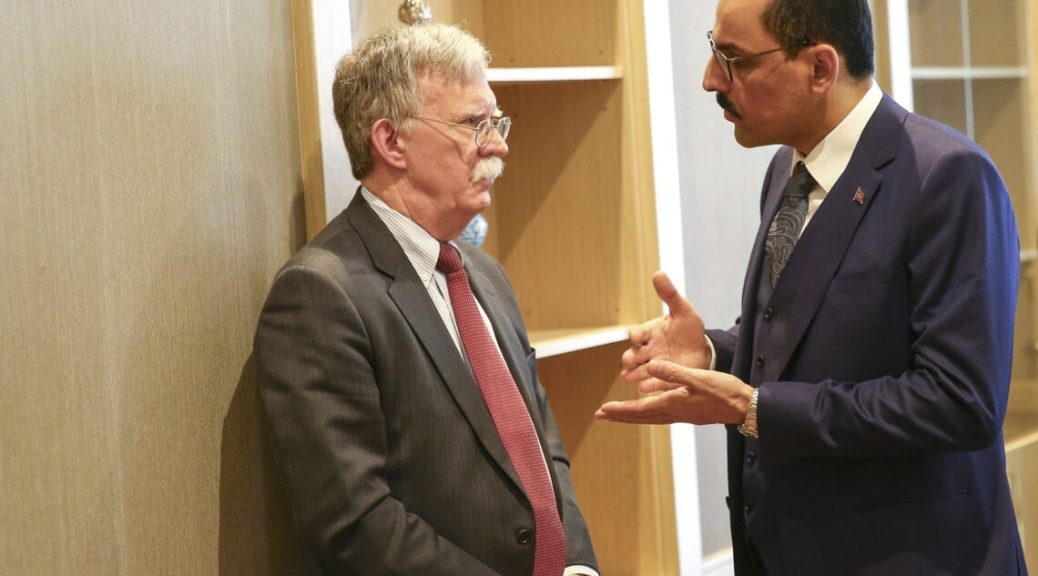
President Trump’s National Security Advisor John Bolton’s visit to Ankara ended up causing more controversy than creating a common ground to work toward a serious strategy. In a previous column, I had warned that “if the U.S. tries to impose conditions on Turkey that may be understood to impinge on Turkish national security requirements, it will mean we are up against the hill once again.” Bolton’s comments prior to his arrival in Turkey were received in Ankara precisely in this vein, drawing the ire of President Erdogan who ended up refusing to meet him in person. Bolton had remarked that Turkey must “meet the president’s requirement that the Syrian opposition forces that have fought with us are not endangered.” These did not seem isolated remarks as some senators suggested that the U.S. withdrawal would result in Turkey “slaughtering Kurds” while Secretary Pompeo tried to reassure them using a similar language. Beyond demonstrating once again that the U.S. lacks a clear strategy, it is struggling to set the right tone in its cooperation with Turkey during the Syria withdrawal process.

Turkey took Bolton’s comments not only as impinging upon its right to protect its national security but also as an insult since Turkish policymakers consistently make a clear distinction between “Kurds” and the U.S./EU designated PKK terror organization as well as its affiliates like the YPG. Nevertheless, President Erdogan emphasized that President Trump’s withdrawal decision would remain the main point of reference for Turkey. Ankara has been ready to coordinate the withdrawal process so as to ensure there is no political vacuum on the ground and there is no Daesh comeback. Turkey is also looking for ways to protect its border by denying the PKK-linked groups safe havens or autonomous regions in northern Syria. It has been the main source of dispute with the U.S. for more than four years and it is not logical to expect Turkey to give up on this national security requirement now as the U.S. withdraws.

Furthermore, the perception in the U.S. that Turkey is somehow against “Kurds” in general is a deep source of frustration for Turks. The U.S. debate around what happens to the “Kurds” after the U.S. leaves Syria has been particularly disturbing, especially since the high-level U.S. officials are fully aware that the U.S. “partners” with the Syrian branch of the PKK in northern Syria. The continued U.S. insistence on the use of the general category “Kurds” to describe the YPG forces in northern Syria is a major irritant for Turkey and a seemingly deliberate effort to legitimize the PKK. This conflation of terms will surely complicate matters in the days ahead and risks derailing Turkish-American cooperation.

The public messaging problems are not in short stock in an age of President Trump’s Twitter diplomacy. In one of his latest tweets, he seemed to warn against Turkey “hitting” Kurds resulting in dire economic consequences for Turkey while warning “Kurds” against provoking Turkey in a second tweet. Turkey was quick to reiterate the distinction between the “Kurds” and the PKK related groups as a response. Soon afterwards, President Erdogan spoke with Trump on the phone on Monday and Trump’s Twitter feed suggests a 20-mile buffer zone was part of the talks. Such a zone could reassure Turkey and potentially ensure a PKK/YPG-free area along the Syrian border. Despite such acknowledgement of Turkey’s security concerns, however, Press Secretary Sarah Sanders’ readout referred to the need that Turkey does not “mistreat the Kurds and other Syrian Democratic Forces with whom we have fought to defeat ISIS.”

This past week has shown once again that the coordination of the U.S. withdrawal from Syria and reassuring Turkish national security concerns will not be an easy task. The process will be subject to public messaging troubles as well as the U.S. domestic political pressures on President Trump, who seems to feel that he needs to address congressional pushback about the need to protect “Kurdish allies.” The road ahead promises to be bumpy but there is still ample room for significant coordination during the U.S. withdrawal process. A serious comprehensive strategy will be unlikely to come about any time soon but the frequent dialogue between Turkey and the U.S. will be of critical value despite the public messaging difficulties.

US-Turkey Cooperation in Syria Requires Serious Strategy

This article was first published by New Turkey on January 7, 2019.

Going forward, the central question will remain the same: what is the U.S. strategy in Syria? With or without U.S. troop presence on the ground, what is the main goal?

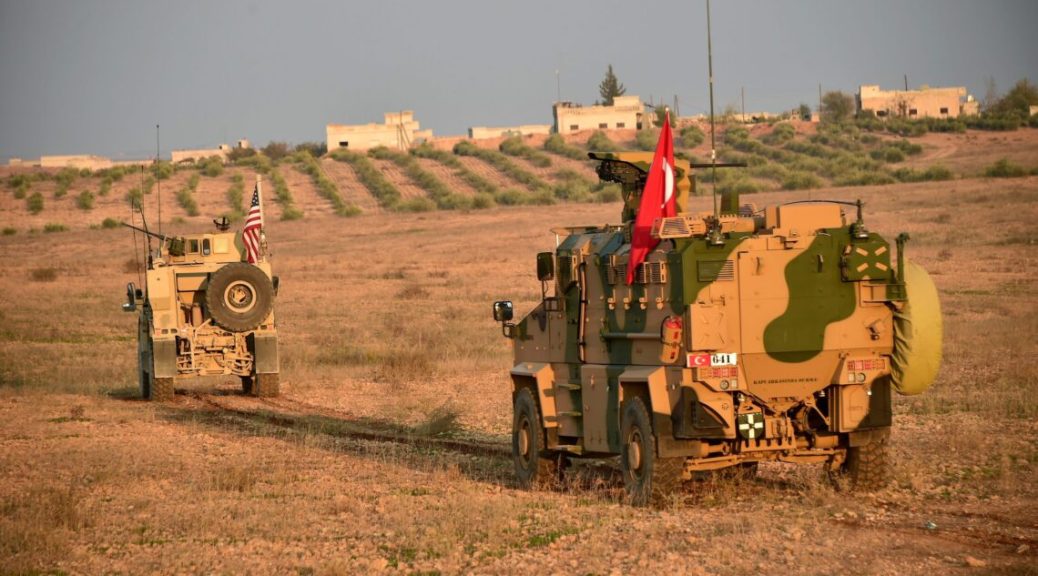
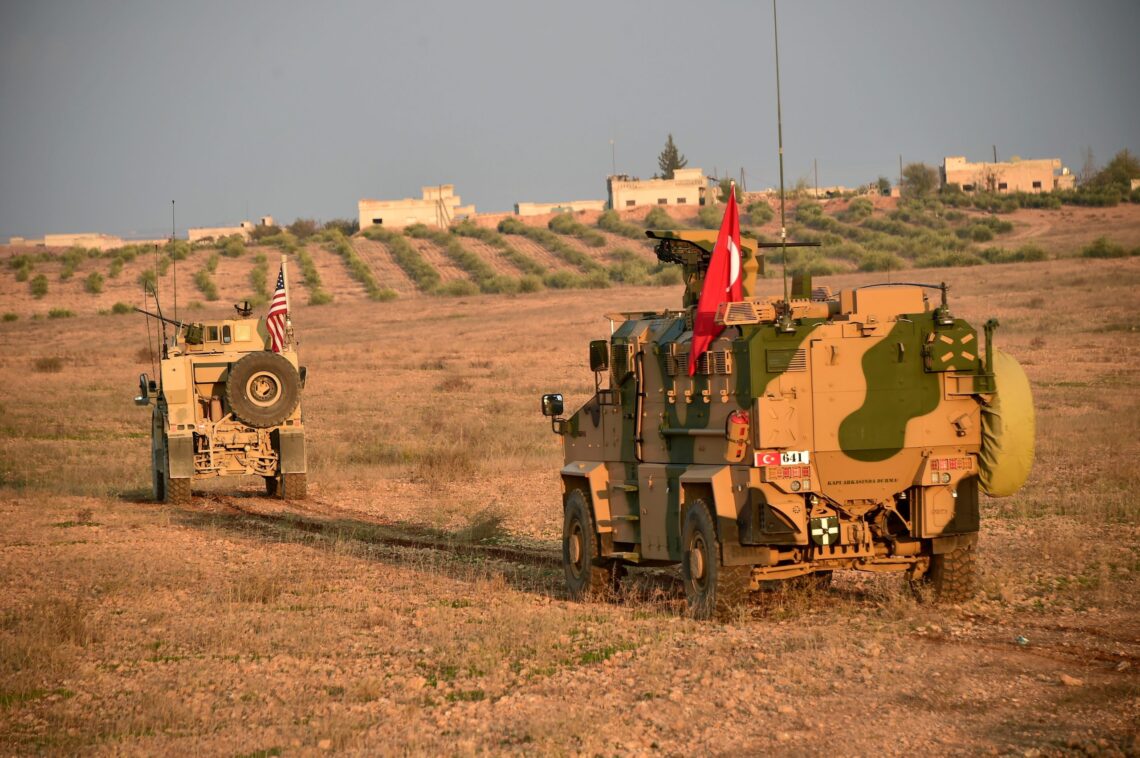
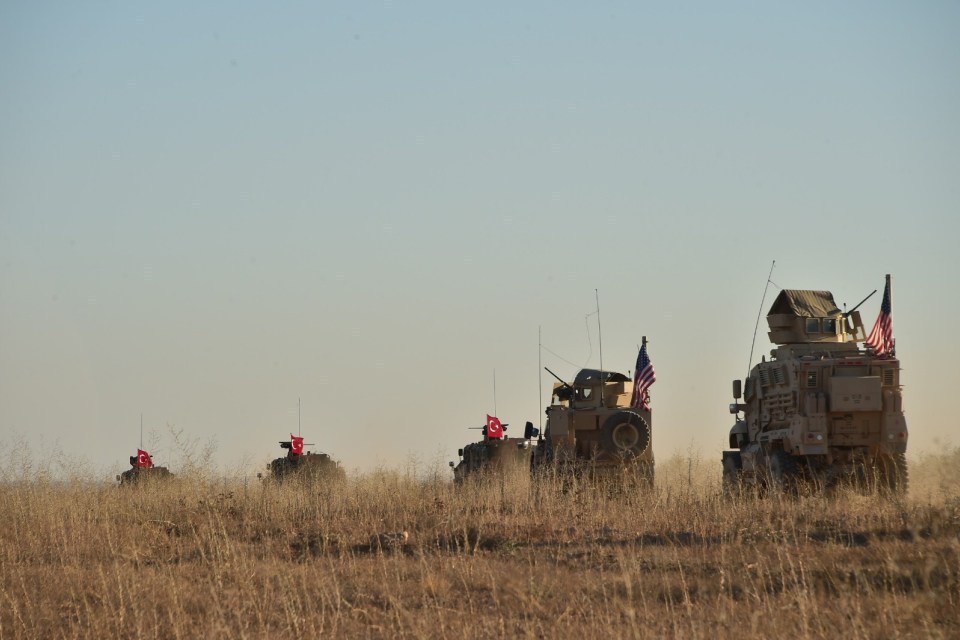
MANBIJ, SYRIA – NOVEMBER 8: (—-EDITORIAL USE ONLY – MANDATORY CREDIT – ” TURKISH MINISTRY OF NATIONAL DEFENSE / HANDOUT” – NO MARKETING NO ADVERTISING CAMPAIGNS – DISTRIBUTED AS A SERVICE TO CLIENTS—-) Armoured vehicles of Turkish and U.S. troops conduct their second round of joint patrols in the northern Syrian city of Manbij, as part of a deal to rid the area of the YPG/PKK terrorist groups, on November 8, 2018 in Manbij, Syria. ( Turkish Ministry Of National Defense / Handout – Anadolu Agency )

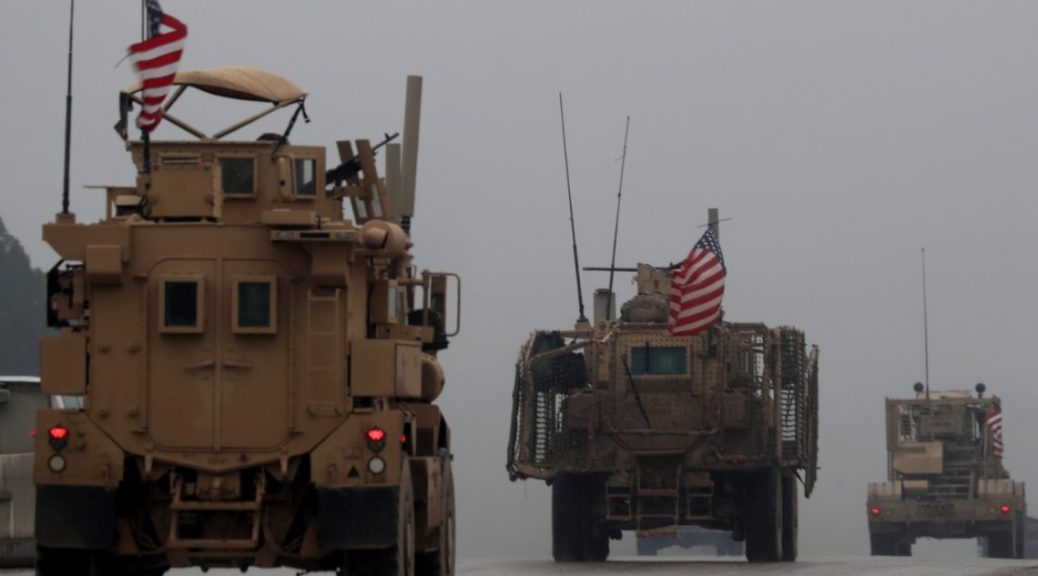
President Trump’s seemingly abrupt decision to pull out of Syria has drawn a lot of criticism from the U.S. media as well as unnamed sources from within the U.S. military. Critics of a quick withdrawal argued that the U.S. should not abandon “Kurdish allies” and that the ground would be left wide open to Iranian and Russian influence. They also argued that Daesh was far from finished. Washington foreign policy experts have been debating the wisdom of an immediate pullout in quite a politicized fashion but they have not been able to make a strong case for staying either. The U.S.-Turkey cooperation is the strongest option for creating lasting stability in northern Syria but it will require a serious strategy.

The main argument of the Obama administration to conduct military operations against Daesh in Syria was that the terror organization was violating international norms, i.e. rendering the Iraq-Syria border meaningless. The sudden takeover of Mosul in the summer of 2014 and the murder of American journalists had created a public outcry and President Obama responded by helping the Iraqi government. Then, the U.S. was clear that the violation of international borders by Daesh would not be accepted. During the Kobani fight, the Obama administration decided to help the YPG fighters on the ground despite Turkey’s warnings. Turkey tried to help the fight by facilitating the passage of Iraqi Peshmergas to Kobani via Turkish territory but the YPG wanted to claim the “victory” against Daesh all on its own. President Obama reassured Turkey that the help was only temporary and strictly against Daesh.

Ever since the fall of 2014, the YPG issue has been a major thorn in U.S.-Turkey relations. The U.S. has justified its continued and expanded support to the group despite knowing full well it was simply the Syrian branch of the PKK, a fact admitted by U.S. government officials in different occasions. More crucially, the U.S. declined various Turkish proposals to work together against Daesh, for example prior to the Raqqa fight. Instead of working with a NATO ally, Pentagon chose to work with a sub-state actor that it found more “effective” against Daesh. The basic dilemma of working with a group considered a terror group by a NATO ally never really escaped the attention of any serious analyst. The U.S. support for the YPG has been justified by the need for working with “local allies” in the anti-Daesh campaign but it has been impossible for U.S. policymakers to put forward a truly strategic justification.

The continued disconnect between the lack of a strategic purpose and tactics used against Daesh ensured the current confusion. Defeating the terrorist organization was never properly defined and the connection between the anti-Daesh fight and U.S. troop presence in northern Syria in support of the YPG was never fully made. The failure to create a clear strategy risked alienating allies like Turkey and confusion among European allies as well. Both the Obama and Trump administrations found themselves caught between the need to respond to Daesh and the American unwillingness to get involved in the region. Neither has been able to offer a strategy that addressed both requirements. Obama’s support for the YPG decision was based more on the former while Trump’s withdrawal decision is based more on the latter. When neither president has put forward a clear strategy and pushed the interagency toward a common goal, we now find ourselves in a situation where different government officials and the agencies appear to work at cross purposes. The disagreement within the US government is visible in the unwillingness to implement President Trump’s Syria decision.

Going forward, the central question will remain the same: what is the U.S. strategy in Syria? With or without U.S. troop presence on the ground, what is the main goal? Some of the goals that have been put forward lack a unifying theme and sometimes they seem at odds with each other. There have been a lot of push back from Washington and now the administration seems to be tilting toward “protecting the Kurds.” However, for Turkey, it is not the Kurds but the PKK’s Syrian branch YPG that the US allied with is the problem. If anything, the YPG dominance in the area is an affront to the Kurds in general and a destabilizing factor in terms of ethnic relations in northern Syria. The next challenge for the U.S.-Turkey relationship is to craft a serious strategy allowing for the U.S. withdrawal, as Turkey assumes a larger role to prevent a power vacuum. However, if the U.S. tries to impose conditions on Turkey that may be understood to impinge on Turkish national security requirements, it will mean we are up against the hill once again.

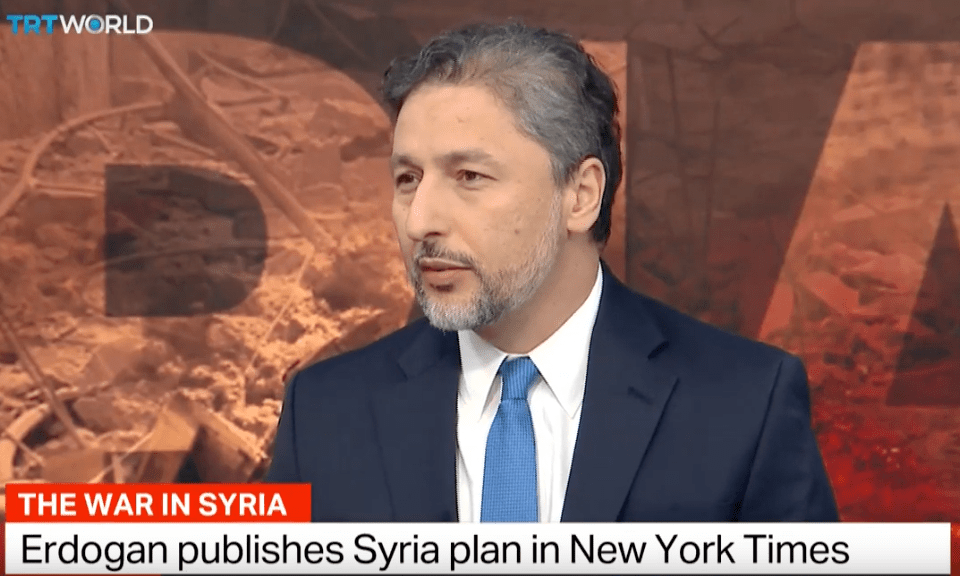
TRT World Interview: Turkey’s YPG concerns contributed to Trump’s Syria decision

Can the US have its Cake and Eat it too in Syria?

This article was first published on The New Turkey on December 11, 2018.

The U.S. balancing act between supporting the PYD and providing reassurances to Turkey to be able to cooperate on the resolution of the Syrian conflict is not an easy one.

11 aralik kadir ustun opinion.jpg

The U.S. wants to cooperate with Turkey on all issues related to the Syrian conflict and sees it as critical to end the civil war. The U.S. Syria envoy James Jeffrey points to the Manbij agreement as a good model for broader cooperation. He is reassuring Turkey that the PYD and YPG members are leaving Manbij and that they will not participate in local councils and the police force, as Turkish policymakers have demanded. Progress, however, in Manbij has been slow and Turkey has yet to declare that the YPG members have left to go east of the Euphrates. It is also not clear in what areas specifically this model can be replicated. Some progress is obviously better than none and the U.S.’ willingness to work with Turkey is an encouraging sign, both for stability of northern Syria and also for the end of the broader conflict. Nevertheless, we need to keep in mind that Turkey continues to be concerned about and feel threatened by YPG control and presence east of the Euphrates as well.

The envoy’s remarks about “pulling the plug” on the Astana process was met with criticism both by Turkey and Russia, who believe they have been making progress contrary to outside views about the lack of tangible results. The failure to create a constitutional committee to draft a new constitution has suffered from the dynamics of the conflict at play since the beginning. The opposition remains fragmented and Assad’s supporters, Russia and Iran, remain invested in the continuation of the regime. Determining the composition of the committee has been extremely difficult not only because the guarantor states cannot agree on who will be participating in the constitution writing process but also because of the fundamental dynamics of the conflict.

In other words, if the balance of power is not significantly changed between numerous sides on the ground, there will be no party that is able to impose its will. By refusing to empower the Arab opposition in concert with Turkey, the U.S. has contributed to this fragmentation. It is not a matter simply of diplomatic negotiations over picking the constitution writers but it is also about creating a committee that reflects the power dynamics on the ground for drafting a constitution acceptable to all sides. In this process, the U.S. should actually support Turkey’s efforts and empower the opposition representatives at the negotiation table instead of calling for the replacement of the Astana process with that of the UN process. The Astana process has been effective in creating de-confliction zones and a forum for those with military presence on the ground to have sustained dialogue. It has not produced a political solution so far but it can contribute to it by engaging one of the most crucial actors on the ground, i.e. Iran.

The U.S. has already declared pushing Iran out of Syria as a major policy goal in Syria and Jeffery’s comments about the end of the Astana process appear to reflect that objective in mind. The Trump administration has been talking about confronting and rolling back Iran’s influence in the region, however it does not currently have a clear plan to achieve that. The only other alternative is for the U.S. to fundamentally shake up the dynamics on the ground and create a different game where other actors may be lured to a framework that excludes Iran. This, however, will be extremely difficult given Iran’s investments in Syria and willingness to commit its military and human resources on the ground. Absent a serious American investment to isolate Iran in Syria, Iran will continue to be part of the discussion as it can act as a spoiler militarily, politically, and diplomatically.

The U.S. balancing act between supporting the PYD and providing reassurances to Turkey to be able to cooperate on the resolution of the Syrian conflict is not an easy one. Moreover, the U.S. hopes to push Iran out of the equation in Syria while achieving a political solution to the civil war, as well as, an “enduring” defeat of Daesh. Granted that the complexity of the terrain has a lot to do with this complicated picture, but the lack of clarity and the mismatch of the U.S. goals with its investments on the ground is the enduring story from the Obama to the Trump administration. The good news is that the U.S. recognizes the crucial role of Turkey in all these goals, however the bad news is all these goals are unlikely to be achieved simultaneously.

The G20 Summit: A Lack of Leadership and Purpose

This article was first published by New Turkey on December 4, 2018. 

Today, what we are seeing is the increasing irrelevance and greater provincialization of multilateral institutions that are supposed to provide comprehensive global solutions. This reality promises further uncertainty and instability around the world, which is already faced with challenges no single nation can solve on its own.

4 aralik kadir ustun opinion.jpg

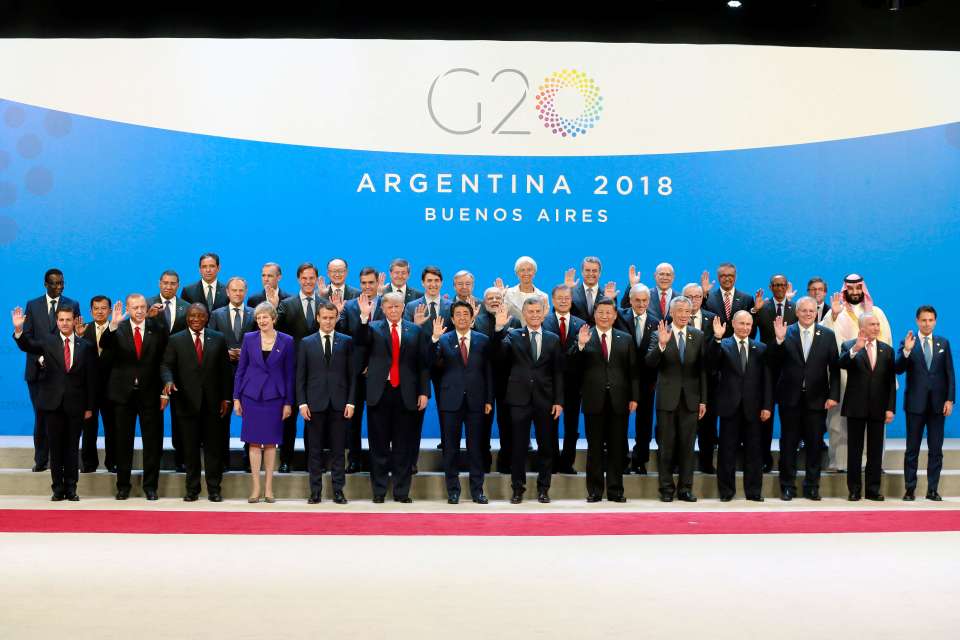
The G20 summit in Argentina ended with no major breakthrough or a breakdown but that is not good news for the pressing global challenges. From climate change to international terrorism and from civil wars to refugee crises, there are a host of issues that continue to spread instability throughout the planet. G20 was conceived of as an institution to bring together economically most capable nations to contribute to the resolution of international challenges outside the United Nations framework, which has long been hampered by the inaction of veto-wielding powers at the Security Council.

To be sure, the G20 was never meant to substitute the UN but it was nevertheless supposed to be more flexible and responsive to global problems hindering economic development and stability. The latest convening of the summit avoided any major political dramas but it has not produced much in the way of building a common framework on any of the major issues facing the community of nations.

All eyes were on President Trump as he finds himself being challenged at home by the Mueller investigation, which appears to be ending. He also has been the subject of heavy criticism for essentially siding with the Saudi administration in the Khashoggi affair in the name of protecting American interests. Further, Russia’s most recent aggressive actions in Ukraine have forced him to cancel a potential meeting with President Putin. His seemingly temporary truce with China was most likely motivated by the need to avoid yet another major political drama, which could have rattled the markets and cost him support domestically. Despite the fact that he appointed a hardliner to lead the trade negotiations going forward, this temporary halt to the trade wars provided him with some ammunition to sell it as a political victory to his constituency. Despite the multilateral nature of the G20 gathering, the biggest news the U.S. walked away with was still a bilateral one, very much fitting the President’s America First approach.

The U.S. was often the major force driving the big agenda items in these international gatherings but this time around nobody expected it in the first place due to the “America First” president in office. At the same time, here appeared to be no clear substitute for the U.S. leadership either. The major players seemed content with a reduced American role that is not interested in leading the conversation to resolve world’s big problems, economic or otherwise. The final communique could not go beyond reaffirming the importance of the multilateral global trading system and had to exclude any criticism of “protectionism” or “unfair trade practices” due to the American and Chinese sensitivities.

Many observers are just happy that a communique was even possible where the Trump administration has attacked multilateralist institutions established in the past under the U.S. leadership. The unwillingness of the U.S. to support the very principles of these very institutions undermines the effectiveness of G20, especially in the absence of another great power willing to underwrite these principles.

While the U.N. has been dysfunctional largely due to the veto powers held by the Security Council member states, the G20 is now becoming ineffective as a result of its “natural leader” to refuse a robust leadership role with a global agenda. That is why, many regional and bilateral issues seemed to be more at the forefront during the summit. The gathering provided yet another opportunity for countries like Turkey to bring the regional issues to the agenda.

Turkey was vocal about the Khashoggi affair, calling on the international community once again to treat it as an affront to international norms. President Erdogan met with President Trump on the sidelines to discuss the status of northern Syria, which has critical national security implications for Turkey. In this sense, Turkey had a successful summit. Nevertheless, the summit underperformed considering the urgency and the seriousness of the global issues facing the planet although some might be content that it ended with a common declaration at the end.

Today, what we are seeing is the increasing irrelevance and greater provincialization of multilateral institutions that are supposed to provide comprehensive global solutions. This reality promises further uncertainty and instability around the world, which is already faced with challenges no single nation can solve on its own. When the most powerful G20 nations cannot unite around a common global agenda, it is becoming increasingly clear that the monumental challenges of the world will remain unattended at least for the time being.